Professional Development
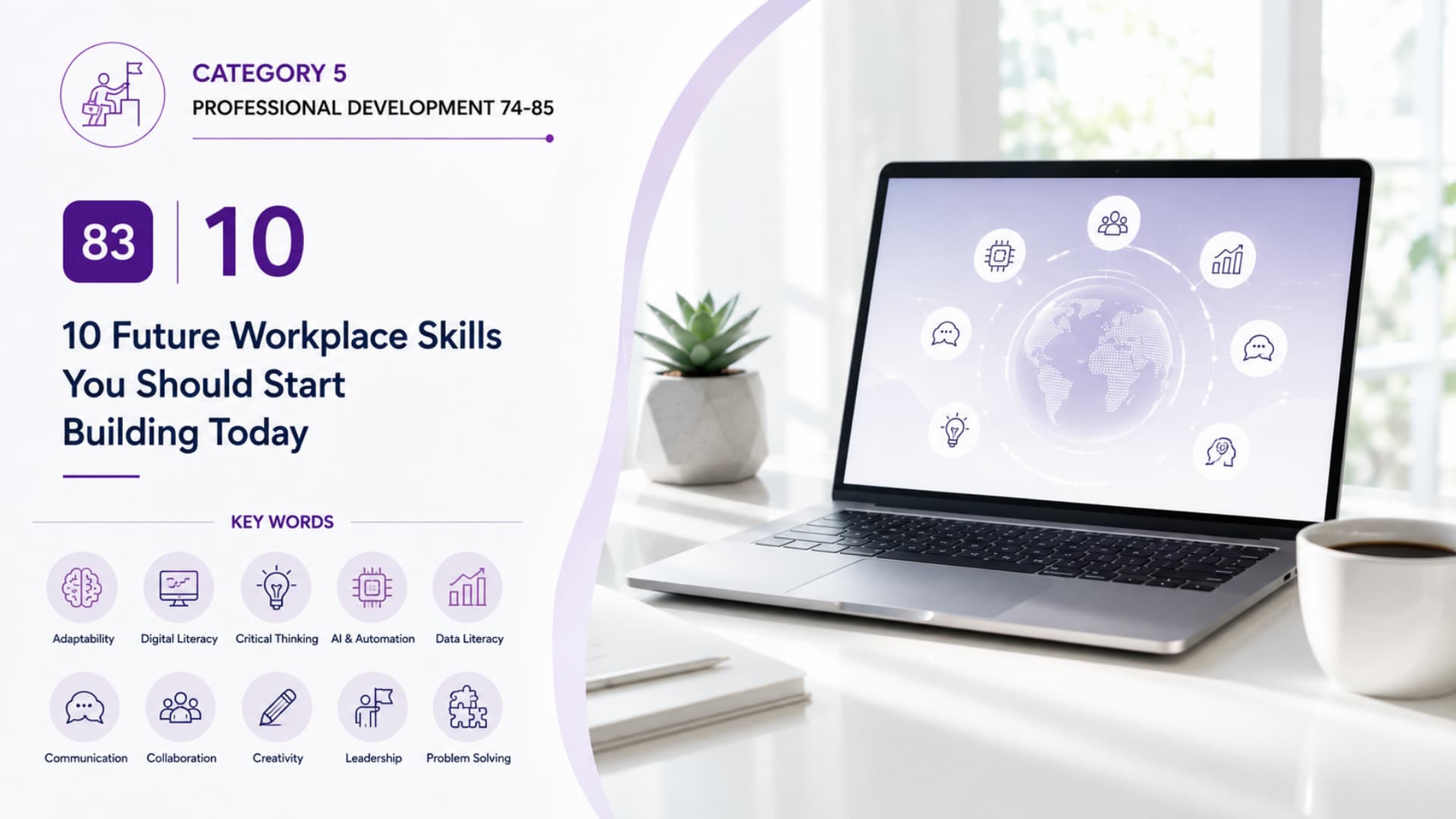
10 Future Workplace Skills You Should Start Building Today
Future Workplace Skills • Career Development • Professional Growth • Future of Work • Learning Agility
The workplace is changing rapidly.
Technology, automation, artificial intelligence, remote collaboration and new business models are reshaping how professionals work.
This means future success will depend not only on what you know today, but on how well you can adapt, communicate, solve problems and keep learning.
Here are 10 future workplace skills you should start building today.
________________________________________
1. Learning Agility
The ability to learn quickly will become increasingly valuable.
Professionals need to:
• Learn new tools
• Understand new processes
• Update their knowledge
• Adapt to changing roles
Why It Matters
Skills can become outdated.
Learning agility helps you stay relevant.
Professional Rule
Learn. Adapt. Relearn.
________________________________________
2. Critical Thinking
Professionals will need to evaluate information rather than accept it immediately.
Ask:
• Is this accurate?
• What evidence supports it?
• What are the alternatives?
• What could be missing?
Why It Helps
Critical thinking supports better judgement and decision-making.
Thinking Principle
Question before concluding.
________________________________________
3. Problem-Solving
Future workplaces will involve unfamiliar challenges.
Strong problem-solvers can:
• Define the issue
• Identify causes
• Explore options
• Test solutions
• Improve results
Why It Matters
Organisations value people who can move from problems to practical solutions.
Work Mindset
Do not only identify problems. Help solve them.
________________________________________
4. Communication
Even in technology-driven workplaces, communication remains essential.
Professionals need to:
• Explain ideas clearly
• Listen carefully
• Write effectively
• Present confidently
• Communicate across teams
Why It Helps
Good communication turns knowledge into action.
________________________________________
5. Collaboration
Future work will often involve cross-functional and distributed teams.
You may work with people from different:
• Departments
• Cultures
• Locations
• Areas of expertise
Why It Matters
Collaboration helps professionals combine strengths and solve complex problems together.
Professional Rule
Work independently. Collaborate intelligently.
________________________________________
6. Digital Fluency
Future professionals need more than basic technology use.
They should understand how to use digital tools effectively for:
• Communication
• Data
• Productivity
• Automation
• Collaboration
• Learning
Why It Helps
Digital fluency allows professionals to work more efficiently in changing environments.
Important Principle
Use technology as a tool, not as a dependency.
________________________________________
7. AI Literacy
Artificial intelligence is becoming part of many professions.
Professionals should learn how to:
• Use AI tools productively
• Ask better questions
• Evaluate AI-generated information
• Understand limitations
• Use AI responsibly
Why It Matters
The advantage may not go only to people who know AI technically.
It may also go to people who know how to work effectively with AI.
Professional Mindset
Human judgement + intelligent tools = stronger capability.
________________________________________
8. Emotional Intelligence
Workplaces involve people, pressure and relationships.
Professionals need:
• Self-awareness
• Emotional control
• Empathy
• Relationship management
• Responsible communication
Why It Helps
Emotional intelligence supports leadership, teamwork and conflict management.
Workplace Rule
Manage yourself before managing others.
________________________________________
9. Adaptability
Future careers may involve changes in:
• Roles
• Teams
• Technology
• Work environments
• Business models
Why It Matters
Adaptability helps professionals respond without becoming paralysed by change.
Career Mindset
Stay flexible without losing direction.
________________________________________
10. Creativity and Innovation
As routine work becomes increasingly automated, uniquely human abilities such as creativity may become even more important.
Professionals should practise:
• Generating ideas
• Reframing problems
• Connecting concepts
• Experimenting
• Improving existing systems
Why It Helps
Creativity helps people create new value rather than only repeat existing methods.
________________________________________
The FUTURE Formula
F — Flexible Thinking
Adapt to change.
U — Upgrade Continuously
Keep developing new skills.
T — Think Critically
Evaluate before deciding.
U — Use Technology Wisely
Build digital and AI fluency.
R — Relate Effectively
Communicate, collaborate and show emotional intelligence.
E — Experiment and Innovate
Create better solutions.
________________________________________
Key Takeaway
The future workplace will reward professionals who can do more than perform one fixed job well.
Build strength in:
Learning Agility • Critical Thinking • Problem-Solving • Communication • Collaboration • Digital Fluency • AI Literacy • Emotional Intelligence • Adaptability • Creativity
The best way to prepare for the future of work is to start developing future-ready abilities today.
Brain Gurukul Perspective
At Brain Gurukul, we believe professional growth depends increasingly on a combination of cognitive, emotional and adaptive abilities.
Technical knowledge remains important, but professionals who can keep learning, think critically, communicate effectively and adapt intelligently will be better prepared for changing workplace demands.
Build skills today. Stay relevant tomorrow. Keep growing for life.
Read. Learn. Apply. Grow.
________________________________________
Blog Number: 83
Blog Name: 10 Future Workplace Skills You Should Start Building Today
Word Count: ~770 words
Future Workplace Skills • Career Development • Professional Growth • Future of Work • Learning Agility