Teachers, Schools & Education
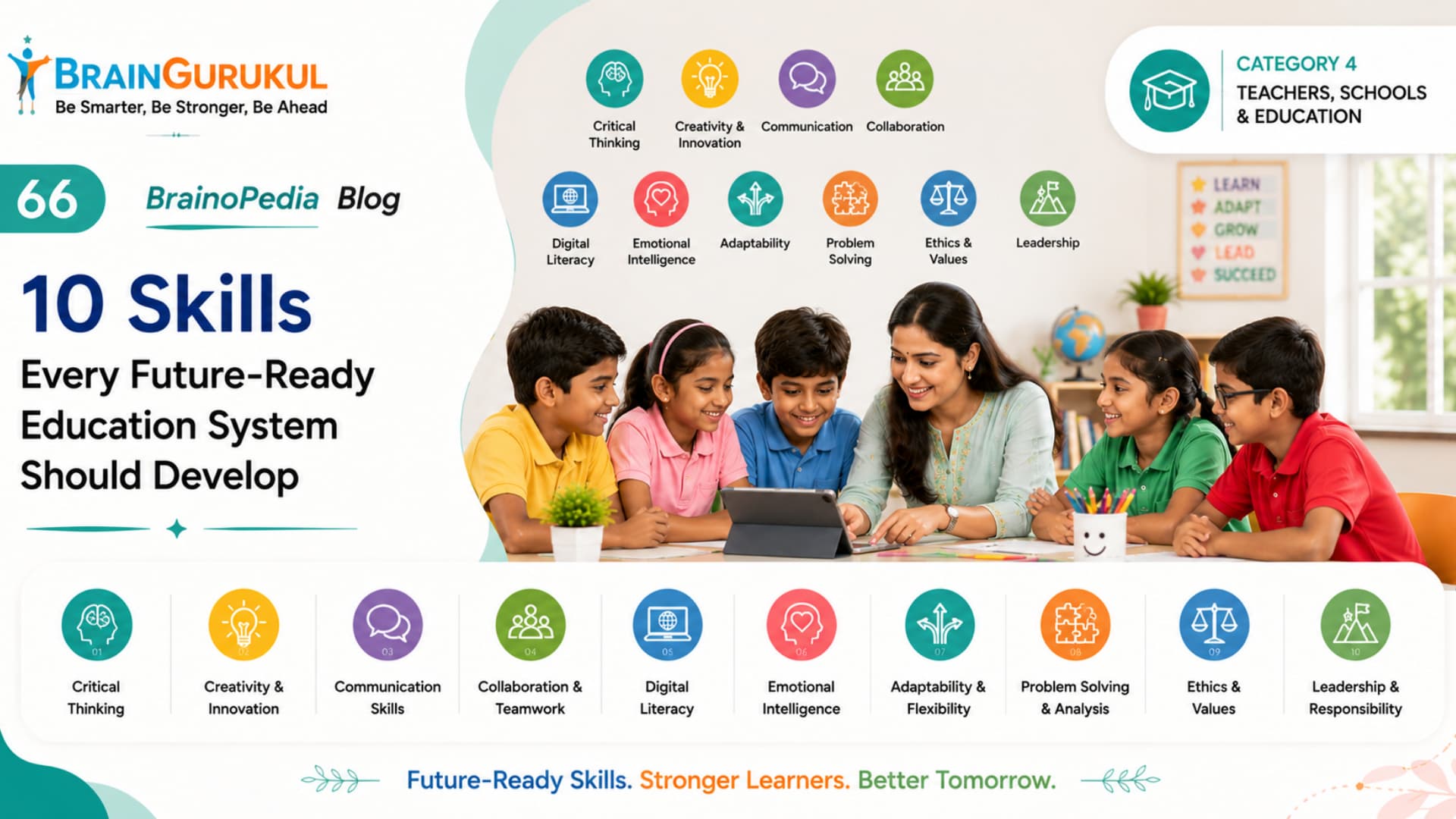
10 Skills Every Future-Ready Education System Should Develop
Future-Ready Education • 21st-Century Skills • Student Development • Education System • Learning Skills
The world students are entering is changing quickly.
Technology, careers, communication and problem-solving are evolving faster than traditional education systems were originally designed for.
That means schools cannot focus only on what students know.
They must also develop how students think, adapt, communicate, create and solve problems.
Here are 10 essential skills every future-ready education system should help students develop.
________________________________________
1. Critical Thinking
Students should learn how to analyse information instead of simply accepting it.
They need to ask:
• Is this information reliable?
• What evidence supports it?
• What are the alternatives?
• What conclusion makes sense?
Why It Matters
Critical thinking helps students make better academic, personal and professional decisions.
________________________________________
2. Problem-Solving
Future careers will require people who can deal with unfamiliar situations.
Students should practise:
• Identifying problems
• Breaking them into smaller parts
• Generating possible solutions
• Testing ideas
• Improving their approach
Learning Rule
Understand the problem before searching for the answer.
________________________________________
3. Creativity and Innovation
Future-ready education should give students opportunities to:
• Generate ideas
• Experiment
• Design
• Imagine alternatives
• Create original solutions
Why It Matters
Creativity helps students move beyond routine answers.
Classroom Mindset
Do not only ask, “What is correct?”
Also ask, “What else is possible?”
________________________________________
4. Communication
Knowledge becomes more useful when students can express it clearly.
They should practise:
• Speaking
• Writing
• Presenting
• Listening
• Asking questions
• Explaining ideas
Why It Helps
Strong communication supports academics, relationships and future careers.
________________________________________
5. Collaboration
Students will increasingly work with people who have different skills, backgrounds and perspectives.
They need to learn how to:
• Share responsibility
• Listen to others
• Resolve disagreements
• Contribute ideas
• Work toward shared goals
Future-Ready Principle
Individual ability matters. Team ability matters too.
________________________________________
6. Digital Literacy
Using technology is not the same as understanding it.
Students should learn how to:
• Use digital tools responsibly
• Evaluate online information
• Protect privacy
• Understand digital risks
• Use technology for learning and creation
Why It Matters
Digital literacy helps students become smarter users of technology, not merely frequent users.
________________________________________
7. Learning Agility
Students cannot depend only on what they learn in school today.
They must learn how to keep learning.
This includes:
• Asking questions
• Finding resources
• Learning independently
• Adjusting strategies
• Updating knowledge
Why It Helps
Learning agility prepares students for change.
Student Mindset
Learn. Unlearn. Relearn.
________________________________________
8. Emotional Intelligence
Future-ready students need the ability to understand and manage themselves while working effectively with others.
This includes:
• Self-awareness
• Emotional control
• Empathy
• Relationship skills
• Responsible decision-making
Why It Matters
Technical ability becomes more powerful when combined with emotional maturity.
________________________________________
9. Adaptability and Resilience
Not every plan will work.
Students need to learn how to respond when:
• Results are disappointing
• Situations change
• Mistakes happen
• New challenges appear
Why It Helps
Adaptability helps students recover, adjust and continue.
Life Skill
Change the strategy without giving up the goal.
________________________________________
10. Self-Management
Future success also depends on the ability to manage:
• Time
• Goals
• Attention
• Habits
• Responsibilities
• Priorities
Why It Matters
Students who can manage themselves become more independent learners.
Student Rule
Own your time. Own your progress.
________________________________________
The FUTURE Formula
F — Flexible Thinking
Adapt when situations change.
U — Use Knowledge
Apply learning to real problems.
T — Think Critically
Question, analyse and evaluate.
U — Understand Others
Communicate, collaborate and empathise.
R — Reinvent and Create
Develop creativity and innovation.
E — Evolve Continuously
Keep learning throughout life.
________________________________________
Key Takeaway
A future-ready education system should not prepare students only for exams.
It should prepare them for life, work, change and continuous learning.
The essential skill set includes:
Critical Thinking • Problem-Solving • Creativity • Communication • Collaboration • Digital Literacy • Learning Agility • Emotional Intelligence • Adaptability • Self-Management
The future belongs not only to students who know more, but to those who can learn, think and adapt better.
Brain Gurukul Perspective
At Brain Gurukul, we believe education should develop the learner as a whole.
Academic knowledge remains important, but future success will increasingly depend on interconnected abilities such as critical thinking, communication, creativity, learning agility and emotional intelligence.
Education becomes more powerful when it prepares students not only to pass examinations, but to face an evolving world with confidence and capability.
Build skills for today. Develop abilities for tomorrow. Prepare learners for life.
Read. Learn. Apply. Grow.
________________________________________
Blog Number: 66
Blog Name: 10 Skills Every Future-Ready Education System Should Develop
Word Count: ~770 words
Future-Ready Education • 21st-Century Skills • Student Development • Education System • Learning Skills