Brain Gurukul Programme Knowledge Hub
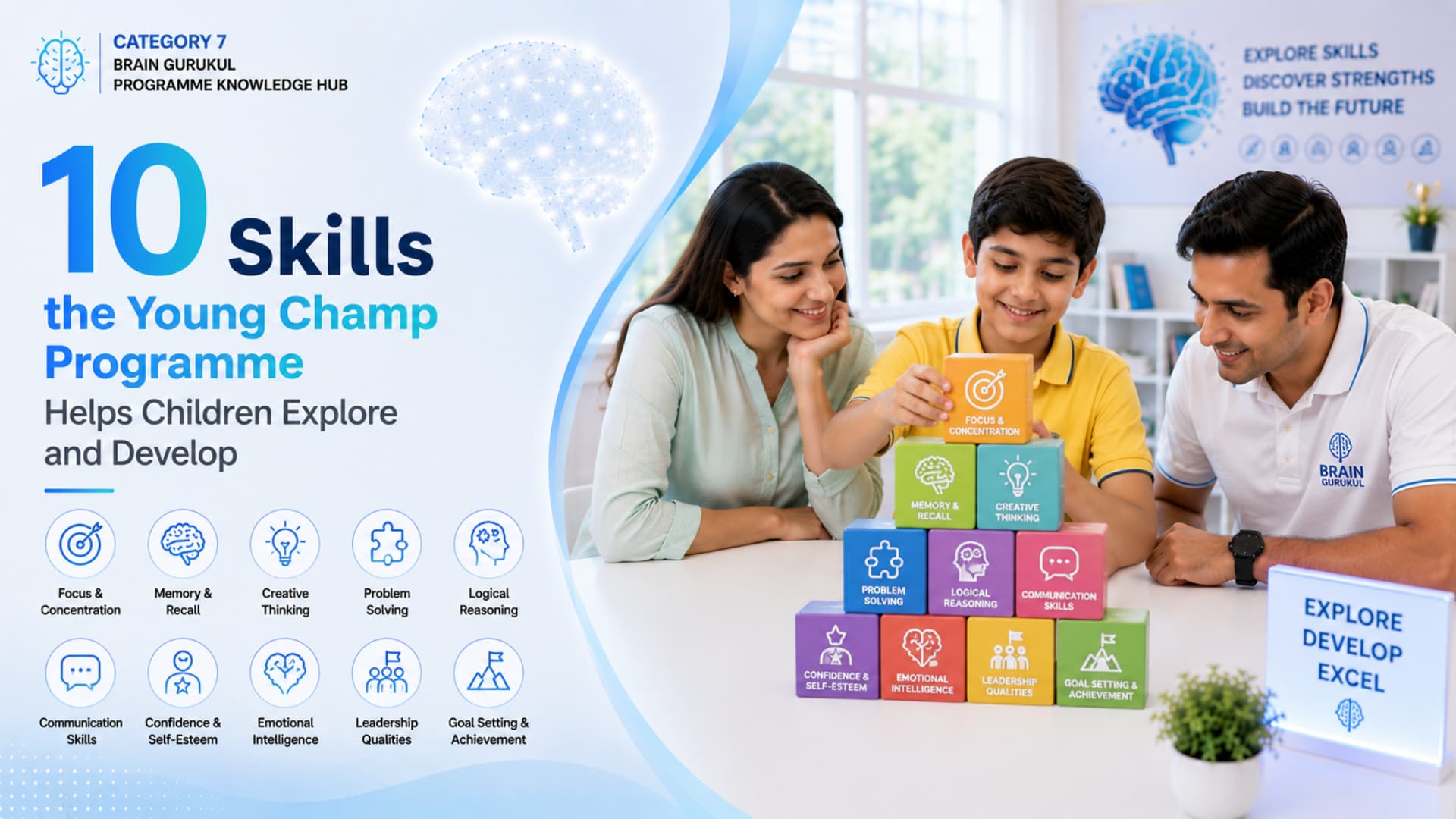
10 Skills the Young Champ Programme Helps Children Explore and Develop
Young Champ Programme • Child Development • Learning Skills • General Knowledge • Brain Gurukul
Children learn best when learning feels interesting, varied and connected with the world around them.
The Young Champ Programme is designed to expose children to a broad mix of knowledge, thinking activities and developmental experiences rather than focusing on only one academic skill.
Its purpose is to help children explore different abilities while building stronger learning habits in an engaging way.
Here are 10 skills the Young Champ Programme helps children explore and develop.
________________________________________
1. Vocabulary Development
A strong vocabulary helps children understand and express ideas more clearly.
Through age-appropriate words, stories and learning activities, children can expand:
• Word knowledge
• Meaning
• Usage
• Expression
Why It Helps
Better vocabulary supports reading, speaking and comprehension.
Learning Rule
More words create more ways to understand and express.
________________________________________
2. General Knowledge
Children benefit from knowing more about the world around them.
Young Champ introduces varied topics that can support knowledge across:
• Nature
• Science
• Culture
• History
• People
• Places
• Everyday life
Why It Matters
General knowledge helps children connect classroom learning with the larger world.
________________________________________
3. Reading and Comprehension
Children are encouraged to read and understand information rather than simply repeat it.
They may work with:
• Short passages
• Stories
• Informational content
• Questions
• Topic-based reading
Why It Helps
Reading becomes more meaningful when children can identify the main idea and explain what they understood.
Student Principle
Read. Understand. Explain.
________________________________________
4. Logical Thinking
Puzzles, riddles and structured challenges can help children think more carefully.
They learn to:
• Identify patterns
• Compare options
• Eliminate wrong answers
• Find relationships
• Reach conclusions
Why It Matters
Logical thinking supports both academics and everyday problem-solving.
________________________________________
5. Critical Thinking
Children should not only know facts.
They should also learn to think about them.
Activities can encourage questions such as:
• Why?
• How?
• What is different?
• What might happen next?
• Which answer makes more sense?
Why It Helps
Critical thinking helps children become more active learners.
Learning Mindset
Do not only know. Think about what you know.
________________________________________
6. Observation Skills
Observation helps children notice details that may otherwise be missed.
They can practise through:
• Pictures
• Visual puzzles
• Comparisons
• Nature topics
• Pattern-based activities
Why It Matters
Better observation can support attention, recall and understanding.
Student Rule
Look carefully. Notice more.
________________________________________
7. Memory and Recall
Children frequently need to remember:
• Facts
• Words
• Sequences
• Concepts
• Story details
Structured activities can help them practise retrieving information.
Why It Helps
Recall becomes stronger when children actively use what they learn.
Learning Loop
Learn → Recall → Check → Strengthen
________________________________________
8. Moral and Social Understanding
Stories and discussion can help children explore:
• Values
• Behaviour
• Responsibility
• Kindness
• Respect
• Choices
Why It Matters
Learning is not only intellectual.
Children also need opportunities to think about how people behave and interact.
Development Principle
Knowledge builds the mind. Values help guide behaviour.
________________________________________
9. Curiosity and Exploration
Children naturally ask questions.
The programme can strengthen this curiosity by exposing them to different themes and subjects.
For example:
• Living world
• Ecology
• Culture
• History
• Science
• Human body
• Technology
Why It Helps
Variety encourages children to explore areas beyond their usual school routine.
Student Mindset
Every new topic can open a new interest.
________________________________________
10. Learning Confidence
As children complete activities, solve challenges and understand new topics, they begin to feel more capable.
This can support confidence in:
• Answering questions
• Participating
• Exploring new topics
• Expressing ideas
• Attempting challenges
Why It Matters
Confidence can make children more willing to learn independently.
Growth Loop
Try → Learn → Improve → Gain Confidence
________________________________________
The CHAMP Formula
C — Curiosity
Explore new topics.
H — Higher Thinking
Use logic and critical thinking.
A — Awareness
Build general knowledge and observation.
M — Memory
Strengthen recall.
P — Participation
Express, explore and learn confidently.
________________________________________
Key Takeaway
The Young Champ Programme is designed to support broad developmental exposure rather than one isolated skill.
It can help children explore:
Vocabulary • General Knowledge • Reading • Logic • Critical Thinking • Observation • Memory • Values • Curiosity • Confidence
The goal is not only to make children know more, but to help them become more curious, capable and confident learners.
Brain Gurukul Perspective
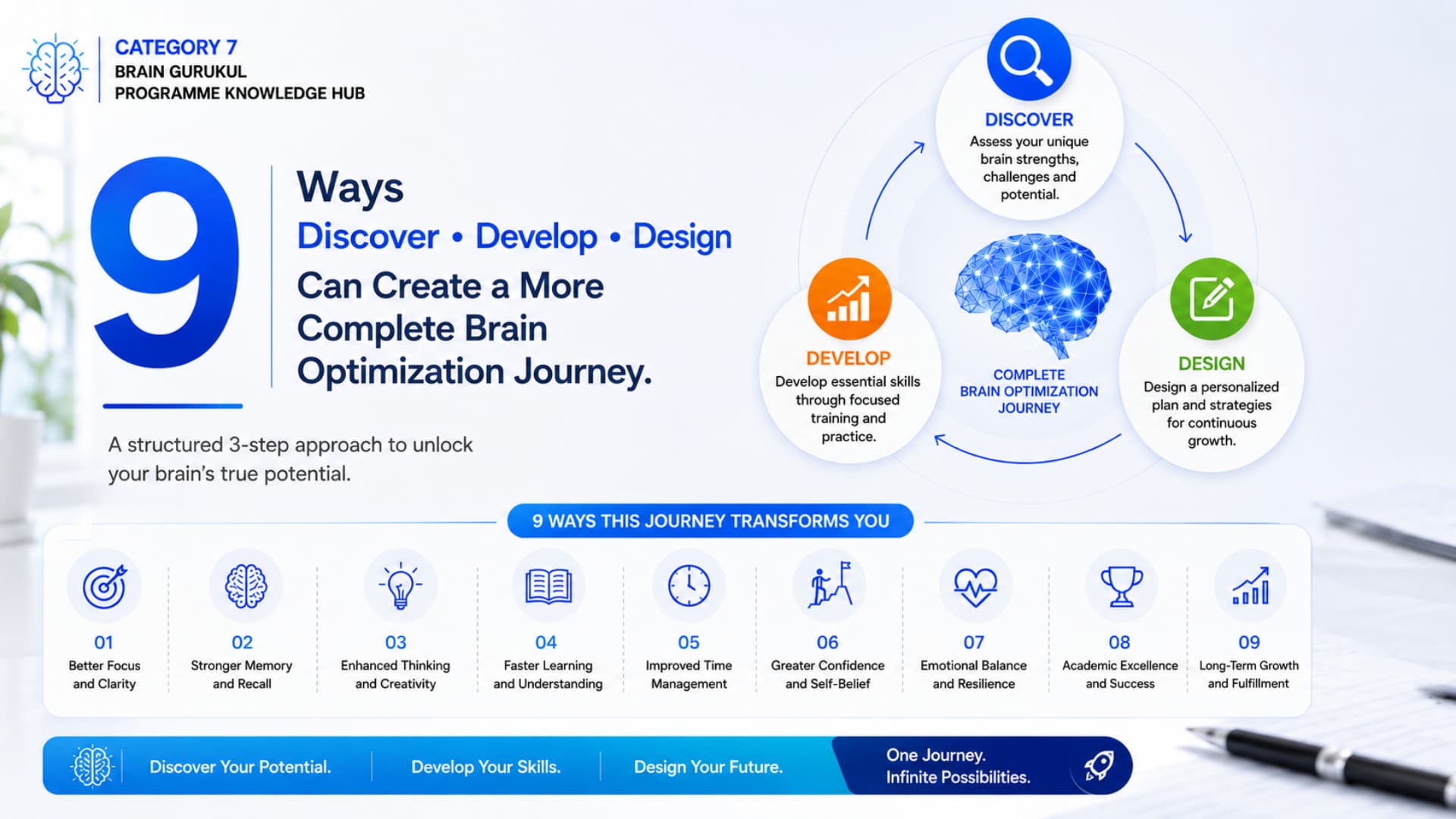
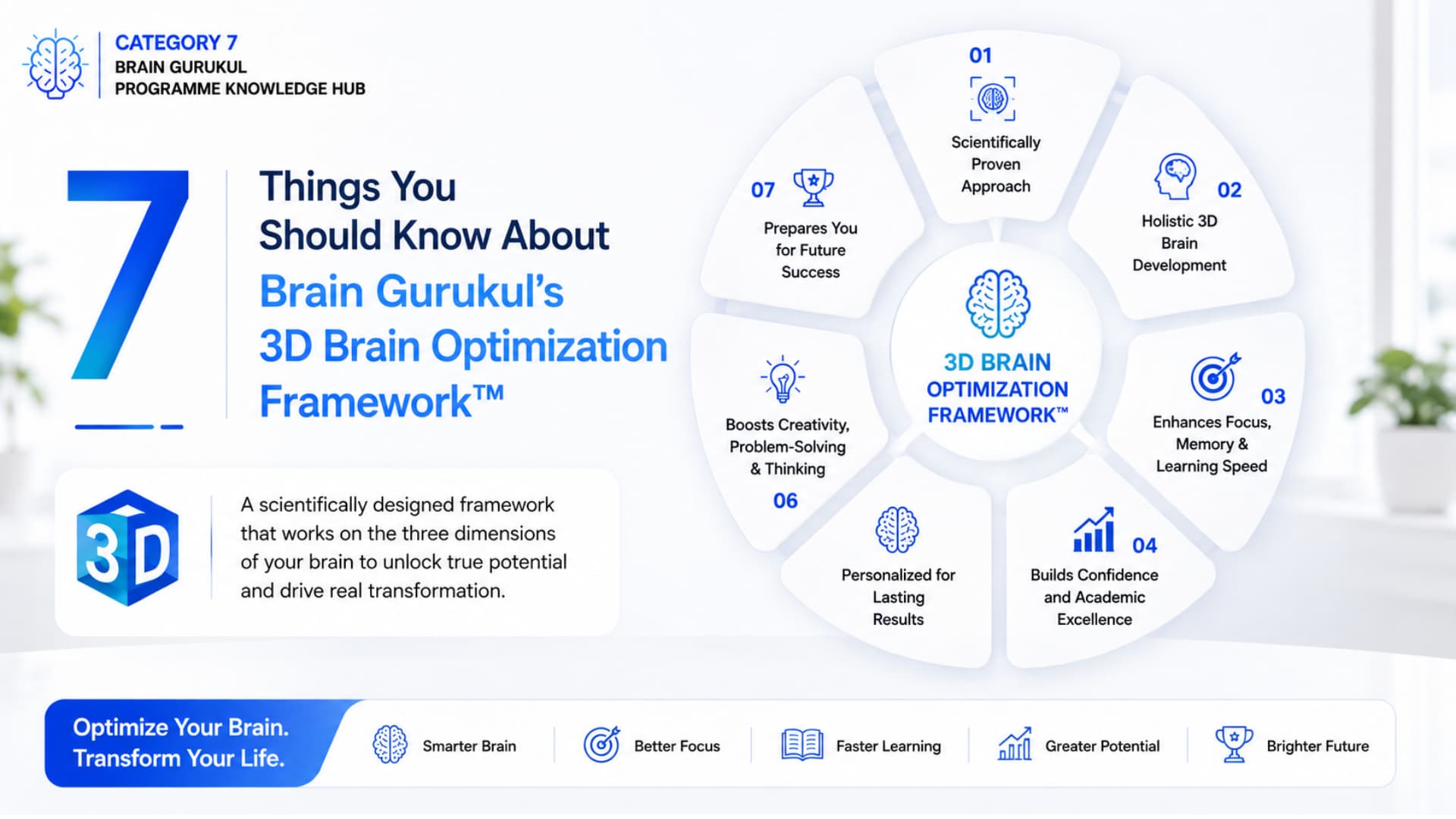
At Brain Gurukul, Young Champ is positioned within the DESIGN stage of the 3D Brain Optimization Framework™.
The programme combines knowledge-building, puzzles, stories, reading material and developmental activities to help children strengthen multiple learning abilities in an engaging format.
Explore widely. Think actively. Learn confidently.
Read. Learn. Apply. Grow.
________________________________________
Blog Number: 109
Blog Name: 10 Skills the Young Champ Programme Helps Children Explore and Develop
Word Count: ~760 words
Young Champ Programme • Child Development • Learning Skills • General Knowledge • Brain Gurukul