Brain Gurukul Programme Knowledge Hub
10 Things Parents Should Know About DMIT Before Taking the Test
: DMIT • Dermatoglyphics Multiple Intelligence Test • Brain Mapping • Learning Strengths • Parent Guidance
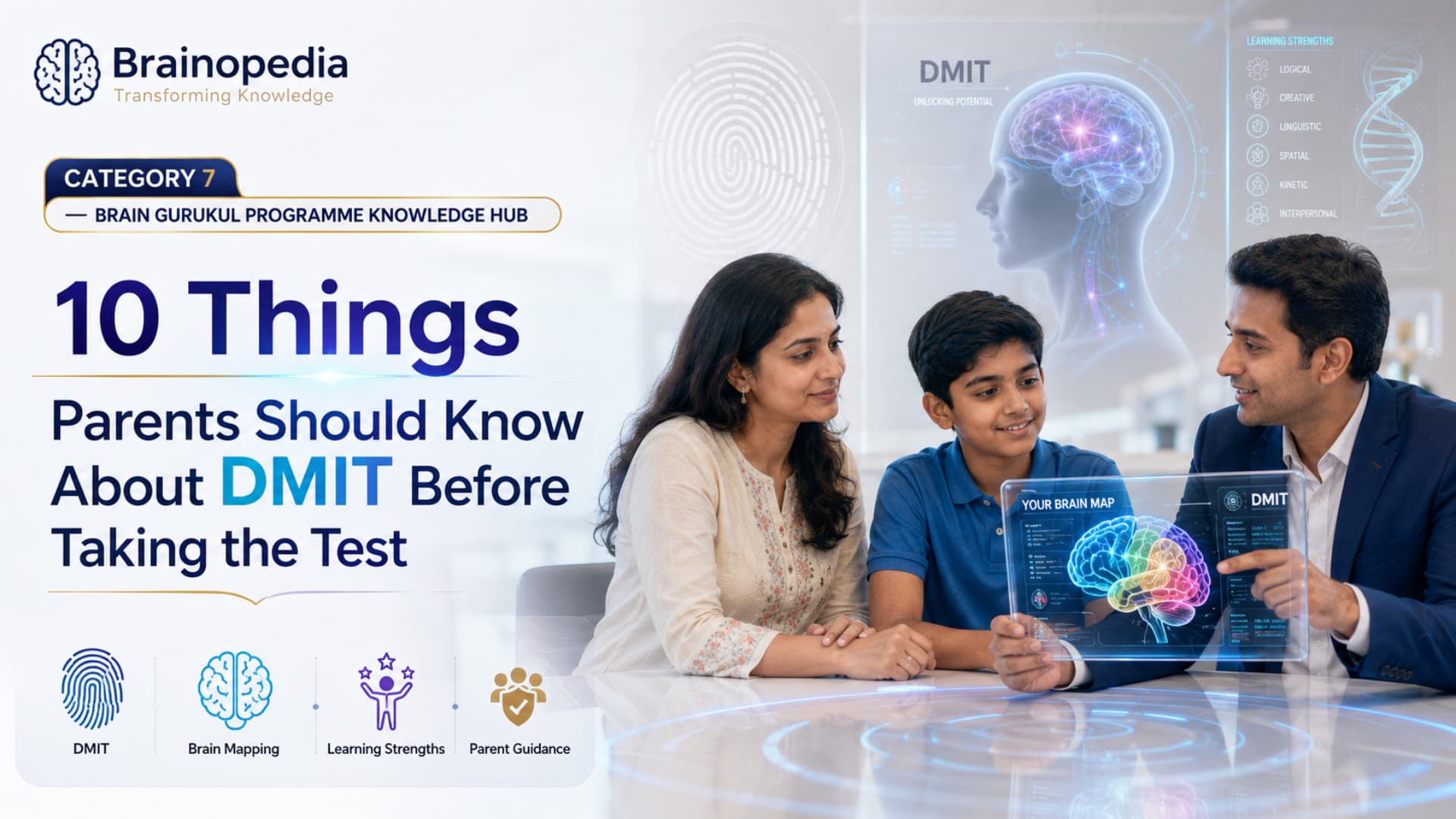
DMIT often attracts parents because it promises deeper insight into how a child may learn, think and respond.
But before taking any assessment, parents should understand what the test is designed to indicate, what it cannot prove, and how its results should be used responsibly.
The goal should never be to label a child.
The goal should be to gain useful insights that can support better guidance, communication and developmental planning.
Here are 10 important things parents should know about DMIT before taking the test.
________________________________________
1. Understand What DMIT Is
DMIT stands for Dermatoglyphics Multiple Intelligence Test.
It is based on the study of fingerprint patterns and is generally presented as a tool that aims to provide insights into areas such as:
• Learning preferences
• Multiple intelligence tendencies
• Brain dominance patterns
• Natural strengths
• Behavioural tendencies
Parent Rule
Use DMIT as an insight tool—not as a final judgement about the child.
________________________________________
2. DMIT Should Not Be Used to Label a Child
A report should never become a permanent identity.
Avoid statements such as:
• “My child is not good at maths.”
• “My child can only succeed in this field.”
• “This intelligence is weak, so this career is impossible.”
Why It Matters
Children continue to learn, practise and develop.
Better Mindset
Use the report to understand possibilities, not limitations.
________________________________________
3. The Report Needs Proper Counselling
A DMIT report can contain many scores, charts and categories.
Reading it without explanation can create confusion.
A trained counsellor should help parents understand:
• What each section means
• What should be treated cautiously
• What patterns may be useful
• How findings can translate into practical guidance
Parent Principle
A report gives information. Counselling gives context.
________________________________________
4. It Should Be Combined With Real-Life Observation
No assessment should replace what parents and teachers already observe.
Consider:
• Academic behaviour
• Interests
• Motivation
• Communication style
• Hobbies
• Classroom behaviour
• Consistency over time
Why It Helps
Assessment insights become more useful when they align with real-world behaviour.
Guidance Formula
Report + Observation + Conversation = Better Understanding
________________________________________
5. Strength Does Not Automatically Mean Interest
A child may show potential in an area without enjoying it.
For example:
A learner may demonstrate strong logical ability but prefer art or communication-oriented activities.
Why It Matters
Parents should separate:
Ability • Interest • Performance
These are related, but not identical.
Parent Rule
Do not confuse capability with passion.
________________________________________
6. Interest Does Not Automatically Mean Career Suitability
A child may love a subject today.
That does not mean a career should be decided immediately.
Career choices should eventually consider:
• Interest
• Ability
• Personality
• Values
• Skills
• Academic readiness
• Real-world exposure
Why It Matters
DMIT should support exploration, not premature career locking.
Better Approach
Discover first. Explore next. Decide later.
________________________________________
7. Development Still Requires Practice
Even if a report indicates a strong potential area, that ability still needs development.
Natural tendency without:
• Practice
• Discipline
• Exposure
• Feedback
• Learning opportunities
may never become meaningful performance.
Why It Helps
Potential is only a starting point.
Parent Principle
Strength discovered must still be developed.
________________________________________
8. Parents Should Avoid Comparing Reports
Two children may show very different patterns.
That is not a problem.
Avoid comparing:
• Intelligence scores
• Learning patterns
• Strength areas
• Dominance profiles
Why It Matters
The purpose is to understand the individual learner.
Parent Mindset
Different does not mean better or worse. Different means different.
________________________________________
9. Use the Report to Improve the Learning Environment
The most useful outcome of any assessment is practical action.
Insights can help parents think about:
• Study methods
• Communication style
• Skill-building activities
• Learning environment
• Confidence-building opportunities
• Areas needing support
Why It Helps
A report becomes valuable when it changes what you do next.
Action Rule
Insight without action has limited value.
________________________________________
10. Treat DMIT as One Input, Not the Whole Answer
A child is too complex to be understood through one assessment alone.
Parents should combine multiple sources:
• Observation
• Teacher feedback
• Academic performance
• Interests
• Behaviour
• Conversations
• Appropriate assessments
Why It Matters
Better guidance comes from a broader picture.
Parent Principle
One report can inform the journey. It should not define the journey.
________________________________________
The DISCOVER Formula
D — Decode Carefully
Understand what the report actually says.
I — Integrate Observation
Compare results with real-life behaviour.
S — Separate Ability and Interest
Do not treat them as the same.
C — Counsel Properly
Use qualified interpretation.
O — Observe Without Labelling
Protect the child’s confidence.
V — Value Individuality
Avoid comparisons.
E — Explore Possibilities
Use insights to guide development.
R — Respond With Action
Turn findings into practical support.
________________________________________
Key Takeaway
DMIT should not be treated as a final verdict about a child.
Its value lies in helping parents ask better questions about:
Strengths • Learning Preferences • Development Needs • Interests • Suitable Support
The purpose of assessment is not to label the child—it is to understand the learner more deeply.
Brain Gurukul Perspective
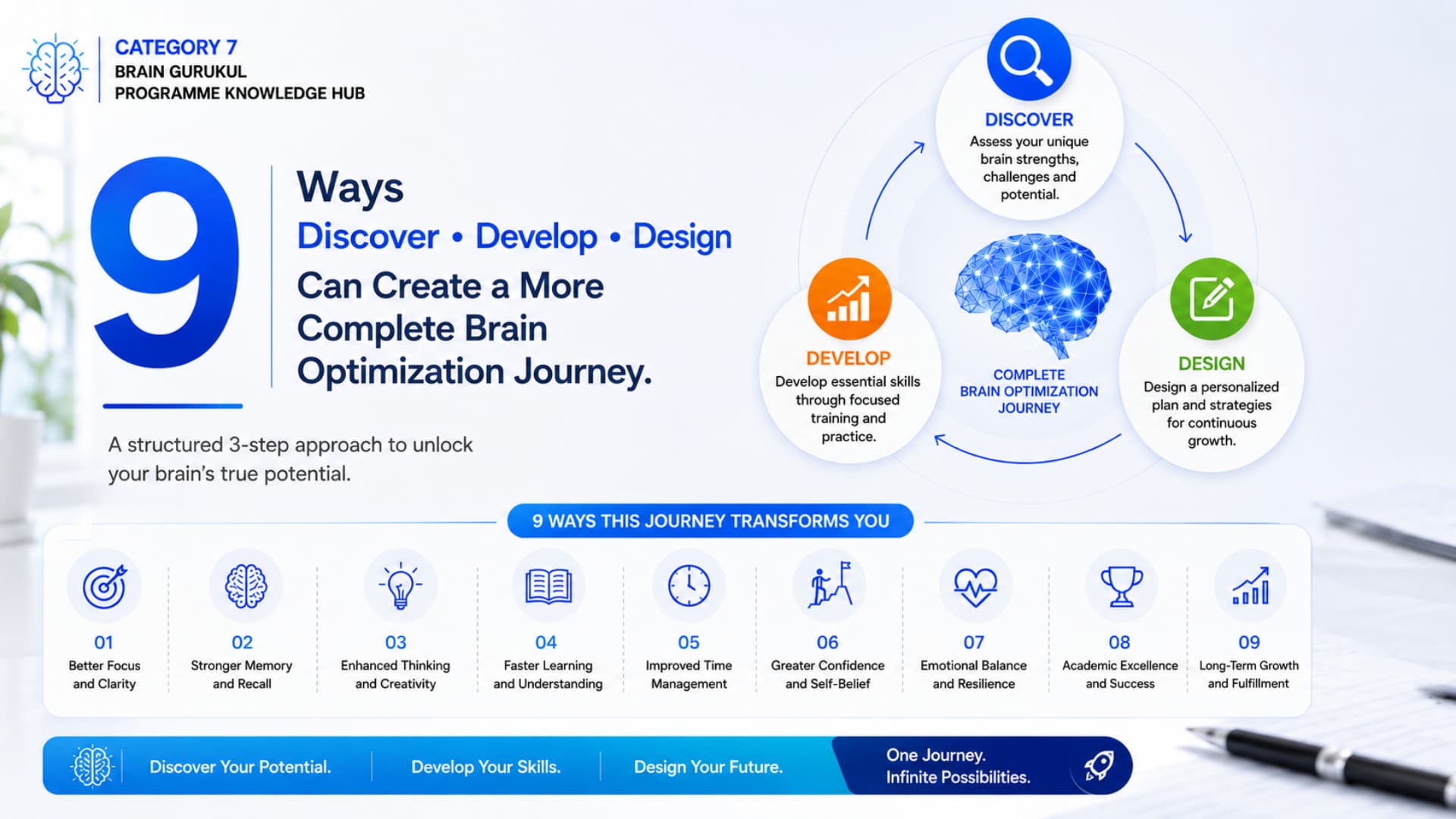
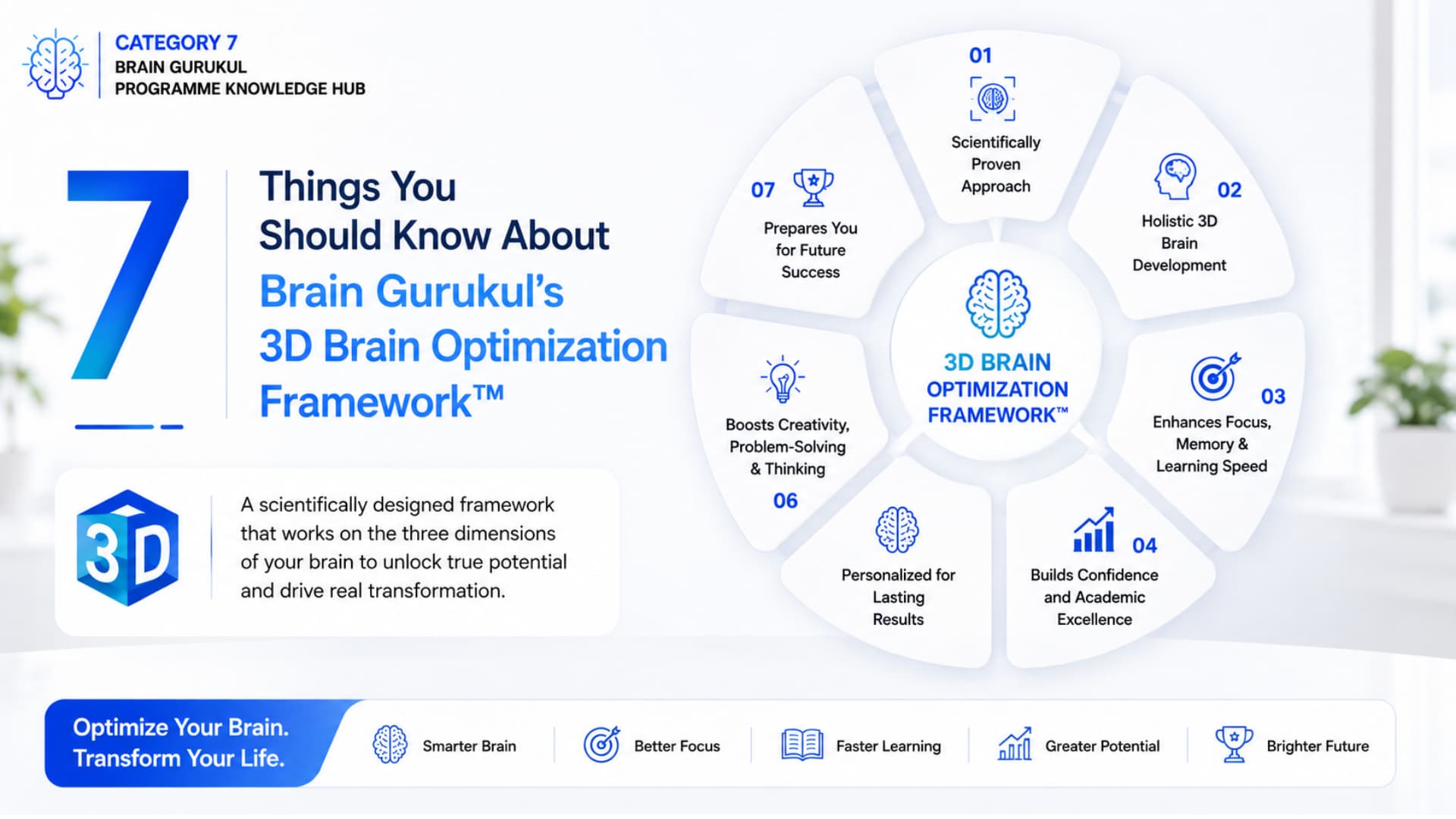
At Brain Gurukul, DMIT is positioned within the DISCOVER stage of the 3D Brain Optimization Framework™.
The objective is to help families gain structured insights that can support more informed development decisions.
Those insights should then be combined with observation, counselling and real-life learning experiences before making important academic or career choices.
Discover thoughtfully. Understand deeply. Develop wisely.
Read. Learn. Apply. Grow.
________________________________________
Blog Number: 101
Blog Name: 10 Things Parents Should Know About DMIT Before Taking the Test
Word Count: ~790 words
: DMIT • Dermatoglyphics Multiple Intelligence Test • Brain Mapping • Learning Strengths • Parent Guidance