Brain Science & Brain Optimization
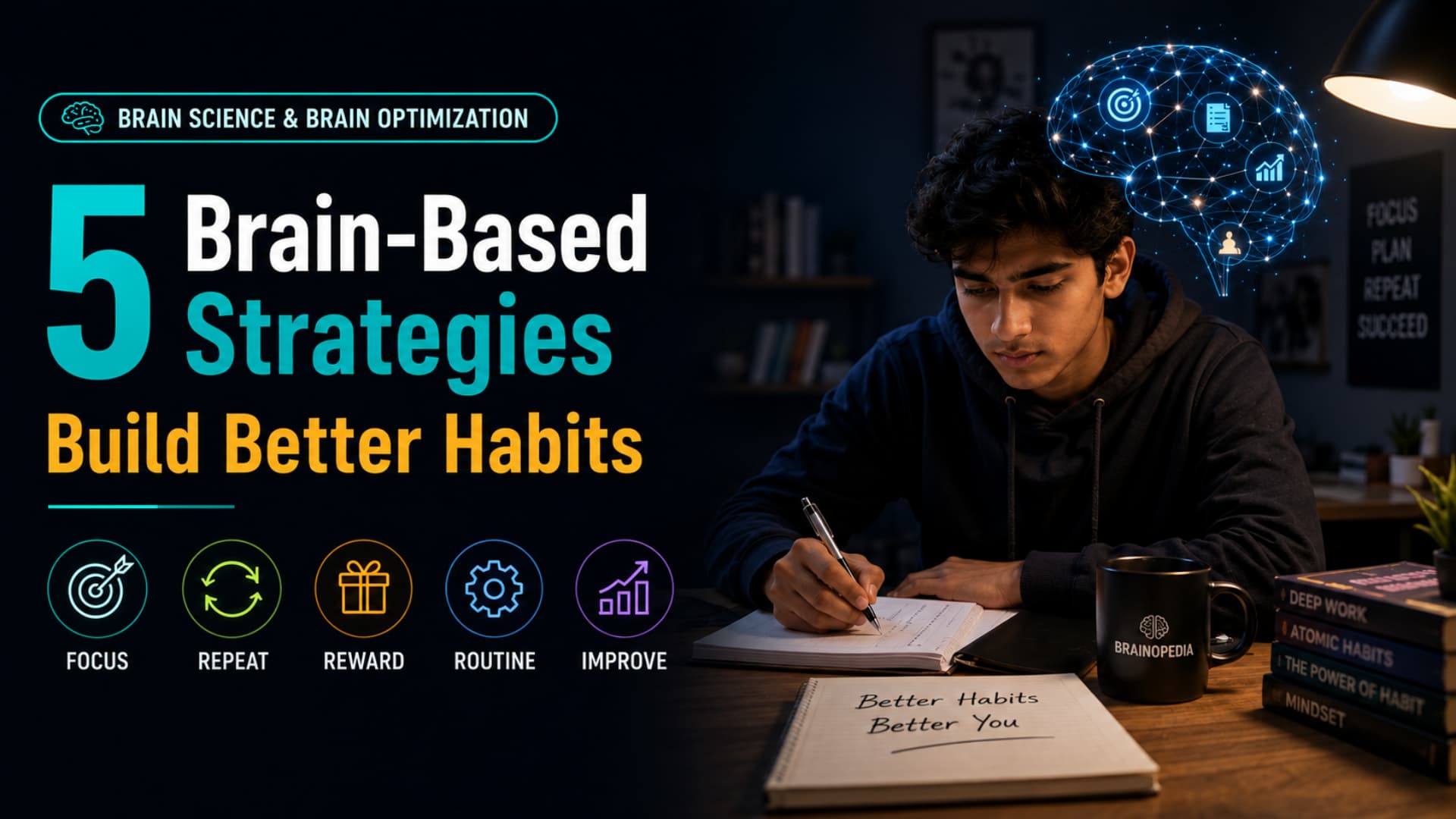
5 Brain-Based Strategies That Can Help You Build Better Habits
Habits • Brain Training • Behaviour • Neuroplasticity • Self-Discipline
Why do some habits become automatic while others disappear after a few days?
Because habits are not built by motivation alone.
They are shaped by repetition, cues, rewards, environment and consistency. Over time, repeated behaviours become easier for the brain to perform with less conscious effort.
That is why creating a better habit is not only about saying:
“I will try harder.”
It is about designing the conditions that make the desired behaviour easier to repeat.
Here are 5 brain-based strategies that can help you build better habits.
________________________________________
1. Start With a Clear Cue
Every habit needs a starting signal.
A cue tells the brain:
“Now it is time to do this.”
Examples:
• After breakfast → read for 15 minutes
• After school → complete one revision block
• After dinner → prepare tomorrow’s task list
• Before bed → keep the phone away and read
Why It Works
A consistent cue reduces the need to make the same decision every day.
Instead of depending on motivation, the behaviour becomes connected to a routine.
Habit Tip:
Attach a new habit to something you already do regularly.
________________________________________
2. Make the Habit Small Enough to Repeat
People often fail because they start too big.
Instead of:
“I will study three hours every day.”
start with:
“I will study for 20 focused minutes.”
Instead of:
“I will read one book every week.”
start with:
“I will read 10 pages every evening.”
Why It Matters
Small actions are easier to repeat.
And repetition is what helps a behaviour become more familiar.
Better Rule
Start small. Repeat often. Grow gradually.
A habit that feels easy enough to begin has a much better chance of surviving.
________________________________________
3. Use Immediate Rewards
The brain responds strongly to rewards.
If a behaviour feels satisfying, you are more likely to repeat it.
The reward does not have to be expensive or dramatic.
It could be:
• Ticking a completed task
• Taking a short break
• Listening to music
• Tracking a streak
• Sharing progress
• Giving yourself a small positive reward
Why It Works
The brain starts connecting:
Behaviour → Positive Outcome
That makes repetition more attractive.
Habit Tip:
Make progress visible.
A simple checklist or streak tracker can make consistency feel rewarding.
________________________________________
4. Design Your Environment
Environment can either support a habit or fight against it.
If your phone is beside you, checking it becomes easy.
If your study materials are already arranged, starting becomes easier.
Make Good Habits Easier
For study:
• Keep books ready
• Use the same workspace
• Remove notifications
• Prepare materials in advance
For reading:
• Keep the book visible
• Place it near your bed or desk
For exercise:
• Keep clothes and shoes ready
Why It Matters
The less effort required to start, the more likely the behaviour is to happen.
Environment often beats willpower.
________________________________________
5. Repeat Until the Behaviour Feels Natural
A habit does not become automatic overnight.
The brain needs repeated experience.
The exact time required varies depending on the behaviour, difficulty, person and environment.
So instead of asking:
“How many days until this becomes a habit?”
ask:
“How consistently can I repeat it?”
Use the Repeat Rule
Cue → Action → Reward → Repeat
If you miss once, restart quickly.
One missed day does not destroy a habit.
What matters is avoiding a pattern of stopping completely.
Remember
Consistency matters more than perfection.
________________________________________
The HABIT Formula
H — Hook It to a Cue
Give the habit a clear starting signal.
A — Aim Small
Make the behaviour easy to begin.
B — Build a Reward
Create a positive feeling after completion.
I — Improve the Environment
Remove friction and distractions.
T — Track and Repeat
Build consistency over time.
________________________________________
Key Takeaway
Better habits are rarely created through willpower alone.
They are built through:
Clear cues • Small actions • Rewards • Supportive environments • Repetition
The most powerful question is not:
“Am I motivated today?”
It is:
“Have I designed this habit so it is easy to repeat?”
That shift can make behaviour change much more practical.
Brain Gurukul Perspective
At Brain Gurukul, we believe strong learning habits are an important part of Brain Optimization.
When learners build better routines around focus, practice, revision and self-discipline, they become more capable of managing their own growth.
Better habits create better learning. Better learning creates better possibilities.
Read. Learn. Apply. Grow.
________________________________________
Blog Number: 17
Blog Name: 5 Brain-Based Strategies That Can Help You Build Better Habits
Word Count: ~765 words
Habits • Brain Training • Behaviour • Neuroplasticity • Self-Discipline