Brain Science & Brain Optimization
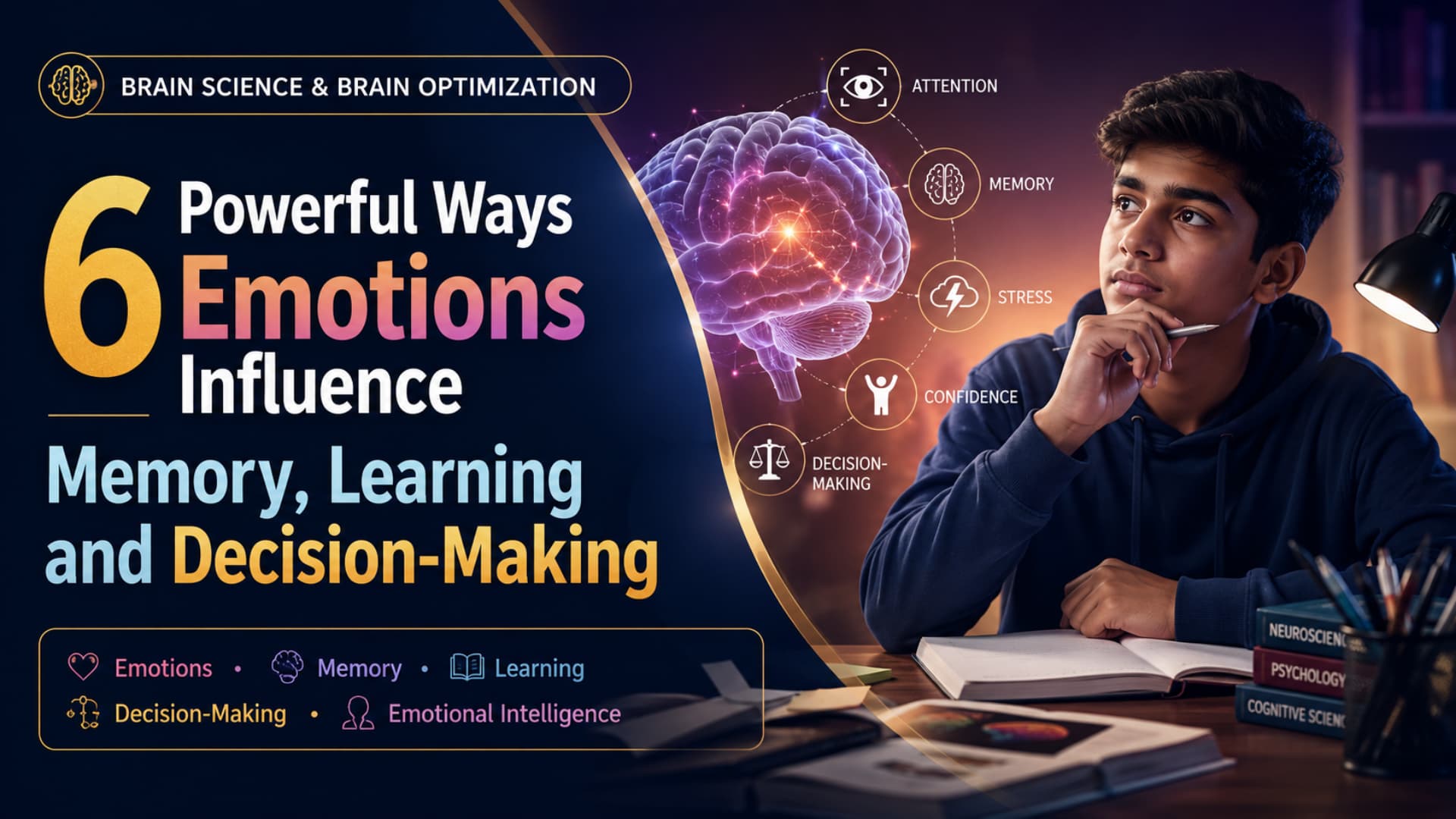
6 Powerful Ways Emotions Influence Memory, Learning and Decision-Making
Emotions • Memory • Learning • Decision-Making • Emotional Intelligence
Have you ever noticed that you can remember an emotional moment from years ago—but forget something you studied yesterday?________________________________________
________________________________________
________________________________________
________________________________________
That happens because emotion and learning are closely connected.
The brain does not process information in isolation. How we feel can influence what we notice, what we remember, how we respond and even the decisions we make.
For children, students and adults, understanding this connection can make learning more effective.
Here are 6 powerful ways emotions influence memory, learning and decision-making.
________________________________________
1. Emotions Influence What Gets Our Attention
Before information can be learned, it must first receive attention.
Strong emotions can quickly pull attention toward something important.
For example, a surprising story, exciting experiment or meaningful question may capture a learner’s attention more effectively than a dry explanation.
Why It Matters
Learning becomes stronger when information feels:
• Relevant
• Interesting
• Meaningful
• Surprising
• Personally connected
Learning Tip:
Don't only present information—give the learner a reason to care about it.
________________________________________
2. Emotional Experiences Can Become Strong Memories
Emotion can make certain experiences easier to remember.
Think about:
• Your first day at school
• Winning an award
• A memorable family trip
• A frightening experience
• An inspiring teacher
These events often remain vivid because emotion was involved.
Why It Matters
Teachers and parents can make learning more memorable through:
Stories • Examples • Experiences • Curiosity • Positive challenges
A meaningful learning experience often stays longer than a disconnected fact.
________________________________________
3. Positive Emotions Can Encourage Learning
When learners feel safe, curious and encouraged, they may become more willing to participate and explore.
Positive emotions can support:
• Motivation
• Confidence
• Curiosity
• Persistence
• Classroom participation
This does not mean children should never face difficulty.
Challenges are important.
But the emotional environment in which those challenges are presented matters.
Better Approach
Instead of:
“You got it wrong again.”
Try:
“Let's understand where the mistake happened and try once more.”
The second approach keeps improvement possible.
________________________________________
4. Too Much Stress Can Interfere With Learning
Some pressure can increase alertness.
But excessive or prolonged stress can make concentration, memory and clear thinking more difficult.
A learner who is extremely anxious about an exam may know the answer but struggle to retrieve it at the right moment.
What Can Help?
• Preparation in advance
• Breaking work into smaller steps
• Regular revision
• Adequate sleep
• Short breaks
• Calm encouragement
Brain Tip:
The goal is not zero stress—it is manageable stress.
________________________________________
5. Emotions Influence Decision-Making
We often imagine decisions are made using pure logic.
In reality, emotions can influence how we evaluate:
• Risk
• Reward
• People
• Opportunities
• Consequences
Excitement may make something look more attractive.
Fear may make us avoid something.
Anger may encourage quick reactions.
Build Better Decisions
Before making an important choice, ask:
1. What am I feeling?
2. Is this emotion influencing my decision?
3. What are the facts?
4. What could happen next?
That small pause can improve judgement.
________________________________________
6. Emotional Intelligence Can Improve Learning and Behaviour
Emotional intelligence includes the ability to recognise, understand and manage emotions.
For learners, this can mean:
• Identifying frustration
• Recovering after failure
• Communicating feelings
• Managing impulses
• Understanding others
• Staying motivated
Why It Matters
A learner who can manage emotional reactions may find it easier to return to the task after a mistake or disappointment.
Emotional skills therefore support much more than relationships.
They can also support learning, behaviour and performance.
________________________________________
The EMOTION Formula
E — Engage Attention
Use meaningful and interesting learning experiences.
M — Make Learning Memorable
Connect information with stories and experiences.
O — Open the Mind
Create a safe environment for questions and mistakes.
T — Tame Excessive Stress
Use preparation and healthy routines.
I — Identify Feelings
Notice emotions before reacting.
O — Observe Decisions
Separate feelings from facts when needed.
N — Nurture Emotional Intelligence
Develop self-awareness and self-control.
________________________________________
Key Takeaway
Emotion is not separate from learning.
It is part of the learning process.
How learners feel can influence:
Attention • Memory • Motivation • Behaviour • Decision-Making
The aim is not to remove emotions.
It is to help learners understand and manage them better.
Brain Gurukul Perspective
At Brain Gurukul, we believe effective Brain Optimization includes both cognitive and emotional development.
A learner who can focus, remember and think well—but also understand and manage emotions—is better prepared for learning and life.
Train the mind. Understand the emotions. Strengthen the learner.
Read. Learn. Apply. Grow.
________________________________________
Blog Number: 15
Blog Name: 6 Powerful Ways Emotions Influence Memory, Learning and Decision-Making
Word Count: ~770 words
Emotions • Memory • Learning • Decision-Making • Emotional Intelligence