
Professional Development
6 Practical Memory Strategies That Can Make You Sharper at Work
Memory Strategies • Workplace Performance • Professional Skills • Focus • Career Development
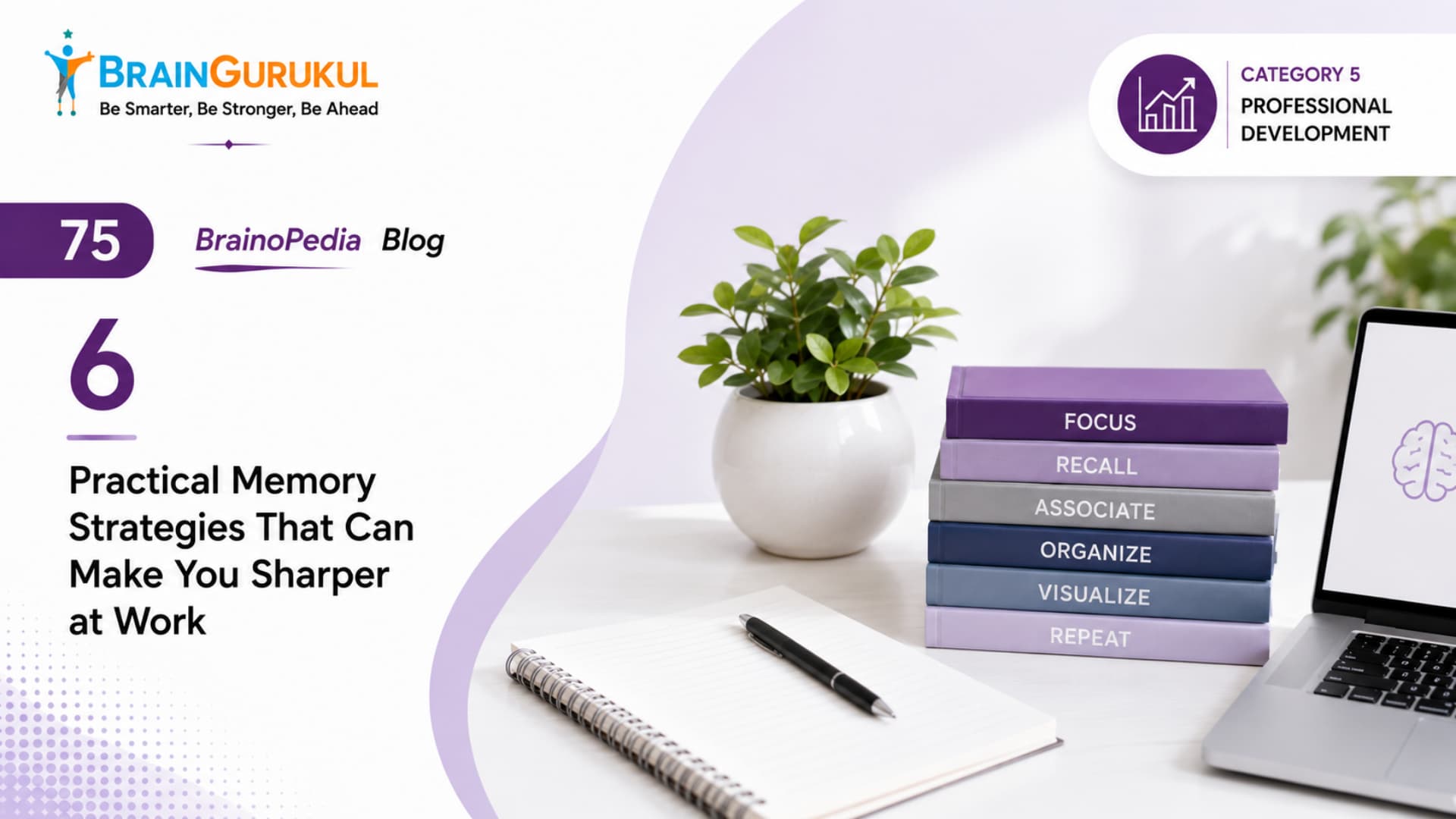
A sharp memory is a valuable professional advantage.
At work, you are expected to remember names, instructions, deadlines, meeting points, client details, ideas and follow-up actions—often while handling multiple tasks at the same time.
The problem is not always weak memory.
Often, information is simply not encoded properly, organised clearly or reviewed at the right time.
Here are 6 practical memory strategies that can help you become sharper and more reliable at work.
________________________________________
1. Pay Full Attention Before Trying to Remember
Memory begins with attention.
If you are checking messages, switching tabs or thinking about another task while someone is speaking, the information may never be stored properly.
Try This
When receiving important information:
• Stop multitasking
• Look at the person or material
• Listen actively
• Identify the key point
Why It Helps
You cannot remember information that your brain never processed properly in the first place.
Professional Rule
Attention first. Memory second.
________________________________________
2. Convert Information Into Meaningful Groups
Long lists are harder to remember than organised chunks.
Instead of remembering:
Client A • Deadline • Budget • Follow-up • Presentation • Approval
group them logically:
Client → Task → Deadline → Next Action
Why It Helps
Chunking reduces mental overload.
Your brain remembers structured information more easily than scattered details.
Memory Strategy
Organise before you memorise.
________________________________________
3. Associate New Information With Something Familiar
New information becomes easier to remember when linked to something you already know.
For example:
If you meet a client named Mr. Green, connect the name mentally with the colour green.
If a project deadline is on the 15th, connect it with another familiar date or milestone.
Why It Helps
Associations create retrieval cues.
Professional Tip
Ask:
“What can I connect this information with?”
________________________________________
4. Write Down the Important Points
Trying to remember everything mentally creates unnecessary pressure.
Use:
• Meeting notes
• Task lists
• Calendar reminders
• Project trackers
• Short summaries
Why It Helps
Writing reinforces memory while reducing the risk of forgetting critical details.
Important Distinction
Writing should support memory—not replace attention.
Work Habit
Listen → Note → Organise → Act
________________________________________
5. Review Information at Smart Intervals
One-time exposure is often not enough.
Review important information:
• Later the same day
• The next day
• Before the next meeting
• Before an important decision
Why It Helps
Brief spaced reviews can strengthen recall over time.
Workplace Example
After a meeting, spend two minutes reviewing:
Decisions • Responsibilities • Deadlines • Follow-Up
This small habit can prevent many avoidable mistakes.
________________________________________
6. Recall Before You Recheck
Before reopening your notes, ask yourself:
• What were the key points?
• What actions were assigned?
• Which deadline was discussed?
• Who is responsible for what?
Then check your notes.
Why It Helps
Active recall makes your brain work to retrieve information.
That is more powerful than repeatedly rereading the same notes.
Memory Loop
Learn → Recall → Check → Correct
________________________________________
The SHARP Formula
S — Stay Attentive
Give important information your full focus.
H — Handle Information in Groups
Organise details logically.
A — Associate
Connect new information with something familiar.
R — Review
Revisit important details at useful intervals.
P — Practise Recall
Retrieve before checking.
________________________________________
Key Takeaway
Better workplace memory is not about trying harder to remember everything.
It is about using smarter systems.
Focus on:
Attention • Organisation • Association • Notes • Review • Recall
A reliable professional does not depend on memory alone—he or she builds habits that make remembering easier.
Brain Gurukul Perspective
At Brain Gurukul, memory and recall are important parts of professional performance.
Strong memory works best when combined with attention, organisation, understanding and regular review.
Professionals who develop these habits can become more dependable, focused and efficient in everyday work.
Pay attention. Organise information. Recall with confidence.
Read. Learn. Apply. Grow.
________________________________________
Blog Number: 75
Blog Name: 6 Practical Memory Strategies That Can Make You Sharper at Work
Word Count: ~740 words
Memory Strategies • Workplace Performance • Professional Skills • Focus • Career Development