Brain Gurukul Programme Knowledge Hub
6 Things Parents Should Understand About Extra Sensory Perception (ESP) Training
Extra Sensory Perception • ESP Training • Sensory Awareness • Focus • Brain Gurukul
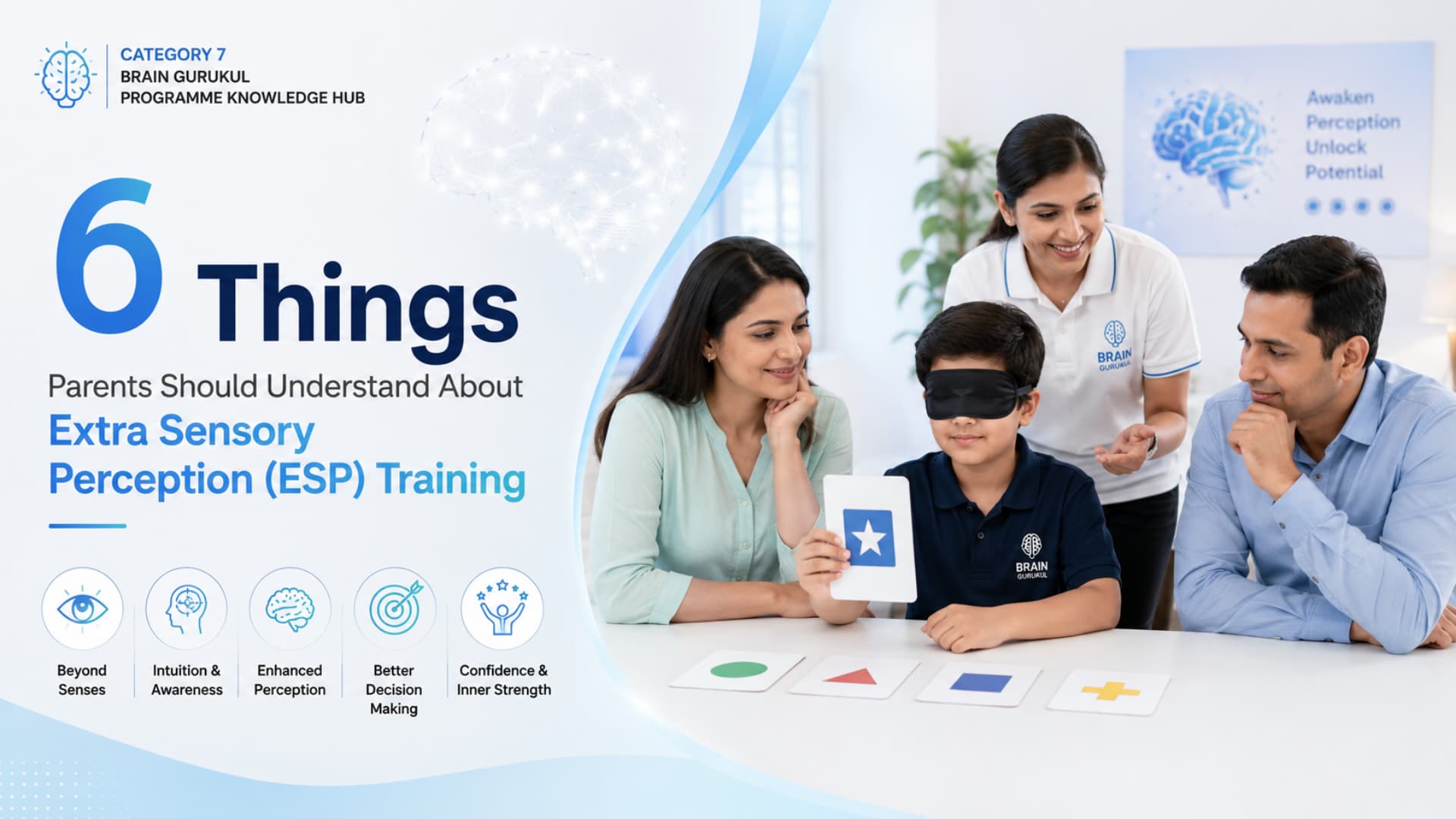
Extra Sensory Perception, often called ESP, is a term used in some brain-development programmes to describe activities intended to strengthen sensory awareness, concentration, intuition and mental responsiveness.
For parents, the most important thing is to understand the programme clearly before enrolling a child.
ESP training should be viewed with realistic expectations, proper guidance and a clear understanding of what the programme is designed to support.
Here are 6 important things parents should understand about ESP training.
________________________________________
1. Understand What the Programme Is Trying to Develop
ESP training programmes may include activities designed around:
• Sensory awareness
• Attention
• Concentration
• Observation
• Intuition-oriented exercises
• Confidence
Why It Matters
Parents should know the actual programme objective instead of relying only on impressive terminology.
Parent Rule
Understand the process before expecting the outcome.
________________________________________
2. ESP Training Should Not Be Treated as a Guaranteed Extraordinary Ability
Parents should be cautious about exaggerated claims.
A child’s response to any developmental programme can vary.
Avoid assuming that every learner will automatically develop unusual or exceptional abilities.
Why It Matters
Unrealistic expectations can create unnecessary pressure on children.
Better Mindset
Look for development, not dramatic claims.
________________________________________
3. The Training Environment Matters
Activities involving sensory awareness and concentration should be conducted in a structured and supportive setting.
Parents should understand:
• Who conducts the programme
• How sessions are organised
• What activities are used
• How learners are guided
• What safety and comfort measures are followed
Why It Helps
A positive environment allows learners to participate confidently.
Parent Question
“How is the programme conducted, and what does my child actually do during the sessions?”
________________________________________
4. Practice and Reinforcement May Be Needed
One session or workshop should not be viewed as the complete development process.
Depending on the programme, learners may be encouraged to continue with:
• Concentration exercises
• Sensory-awareness activities
• Observation practice
• Relaxation routines
• Guided reinforcement
Why It Matters
Skills generally improve through repetition and practice.
Learning Loop
Experience → Practise → Reinforce → Observe
________________________________________
5. ESP Should Not Replace Academic or Foundational Learning
A child still needs to develop core learning abilities such as:
• Reading
• Writing
• Comprehension
• Memory
• Reasoning
• Study habits
• Communication
Why It Matters
ESP training should be seen as a supplementary developmental experience, not as a replacement for academics or structured learning.
Parent Principle
Development programmes should complement learning, not replace it.
________________________________________
6. Evaluate the Child’s Overall Growth
Parents should avoid judging the programme only through one dramatic outcome.
Observe broader changes such as:
• Better concentration
• Greater confidence
• Improved attention
• Increased awareness
• Better participation
• More disciplined practice
Why It Helps
Broader observation gives a more balanced picture of development.
Parent Mindset
Track meaningful progress, not only unusual performance.
________________________________________
The SENSE Formula
S — See the Purpose
Understand what the programme aims to develop.
E — Expect Realistically
Avoid exaggerated assumptions.
N — Notice the Learning Environment
Check trainer quality and structure.
S — Support Practice
Reinforce learning consistently.
E — Evaluate Overall Growth
Look at attention, confidence and awareness.
________________________________________
Key Takeaway
Before enrolling in ESP training, parents should understand:
Programme Purpose • Realistic Expectations • Trainer Quality • Practice • Academic Balance • Overall Development
The value of a developmental programme should be judged by how responsibly it supports the learner—not by exaggerated promises.
Brain Gurukul Perspective
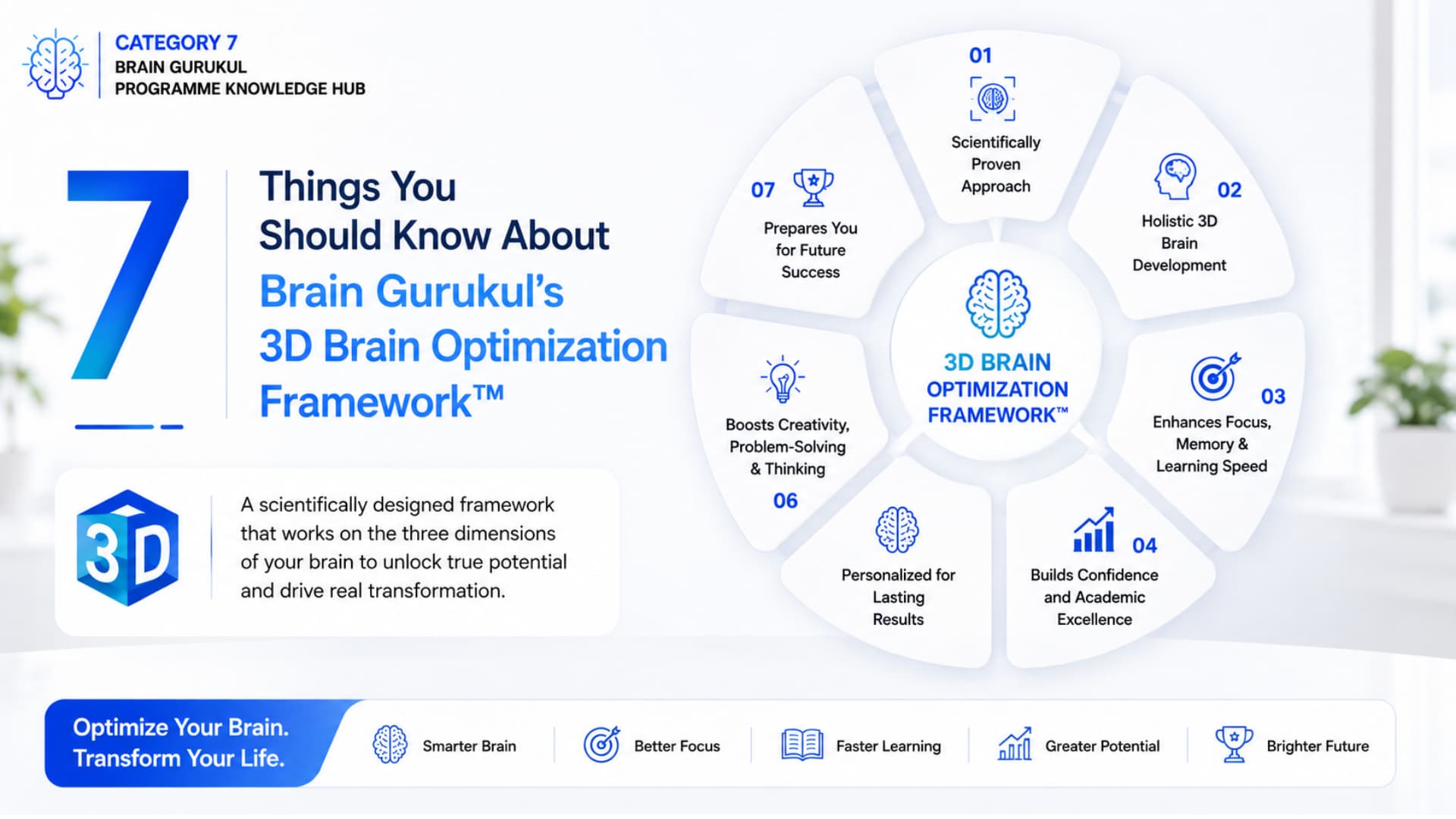
At Brain Gurukul, ESP is positioned within the DEVELOP stage of the 3D Brain Optimization Framework™.
The programme is intended to support areas such as sensory awareness, focus, concentration and intuitive responsiveness as part of a broader developmental journey.
It should be understood as one element within a more complete learning ecosystem rather than as a stand-alone shortcut to extraordinary performance.
Strengthen awareness. Build focus. Develop progressively.
Read. Learn. Apply. Grow.
________________________________________
Blog Number: 103
Blog Name: 6 Things Parents Should Understand About Extra Sensory Perception (ESP) Training
Word Count: ~745 words
Extra Sensory Perception • ESP Training • Sensory Awareness • Focus • Brain Gurukul