Teachers, Schools & Education
6 Ways Teachers Can Support Different Learners in the Same Classroom
Differentiated Learning • Inclusive Classroom • Teaching Strategies • Student Support • Education
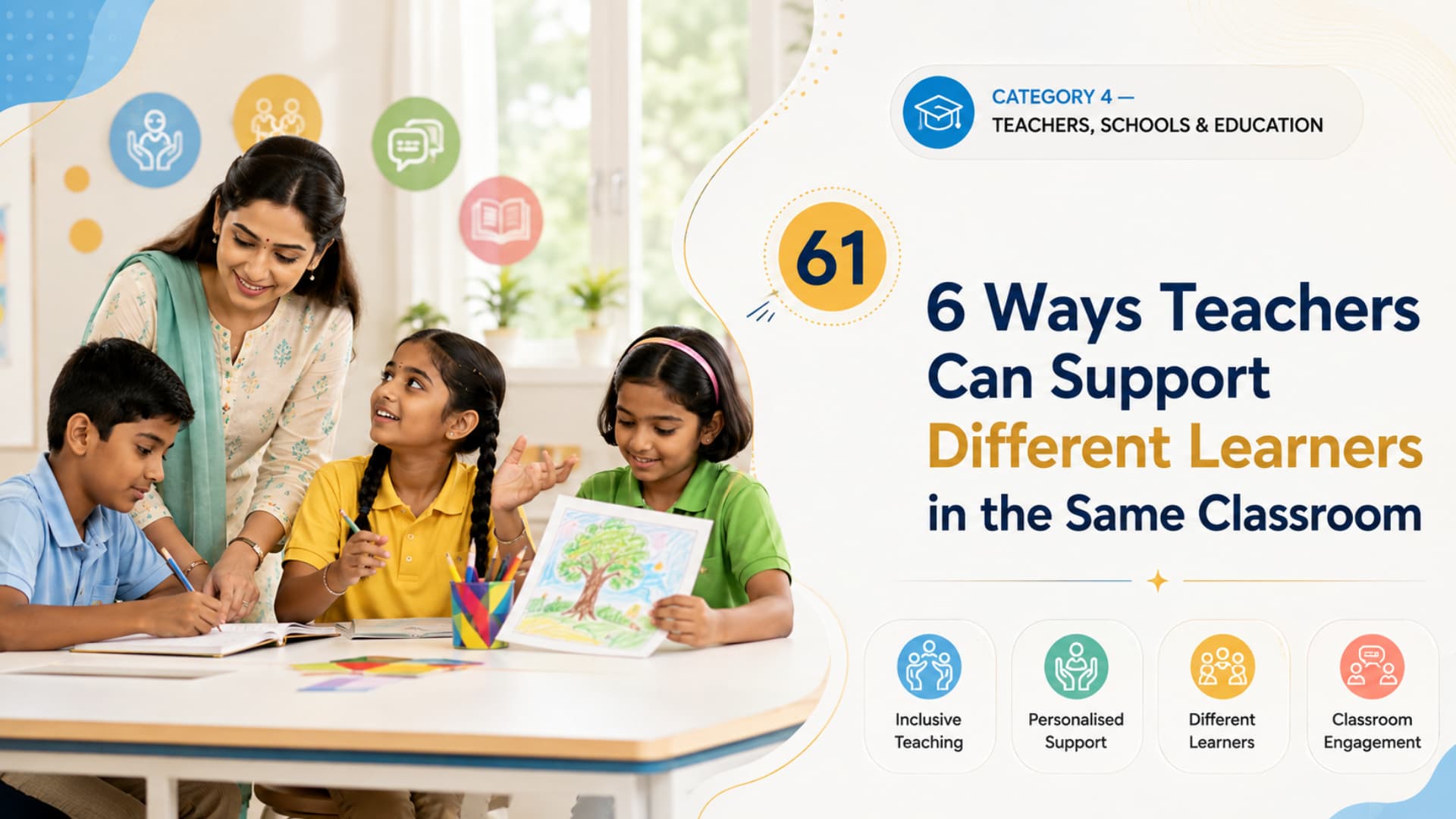
Every classroom includes students who learn differently.
Some understand quickly through explanation. Others need examples, visuals, practice, discussion or more time.
The challenge for teachers is not to create a completely different lesson for every student.
The goal is to make learning flexible enough for more students to access, understand and participate in it.
Here are 6 practical ways teachers can support different learners in the same classroom.
________________________________________
1. Present the Same Concept in Different Ways
A single explanation may not work equally well for everyone.
Try combining:
• Verbal explanation
• Visuals
• Demonstrations
• Examples
• Diagrams
• Short activities
Why It Helps
Students get more than one pathway to understand the same idea.
A learner who misses the verbal explanation may understand immediately through a diagram or example.
Teaching Rule
Same concept. Multiple pathways.
________________________________________
2. Break Learning Into Manageable Steps
Some students become overwhelmed when too much information is introduced at once.
Break the lesson into smaller parts.
For example:
Explain → Demonstrate → Practise → Check → Continue
Why It Helps
Students get time to process each step before moving ahead.
Classroom Tip
Do not assume silence means understanding.
Pause and check before adding the next layer.
________________________________________
3. Use Flexible Grouping
Students do not always need to work in the same groups.
Sometimes group them by:
• Similar support needs
• Mixed ability
• Shared interests
• Task type
• Random selection
Why It Helps
Different grouping styles create different learning opportunities.
Students can receive support, collaborate and learn from one another.
Teacher Reminder
Avoid permanently labelling students as “strong” or “weak.”
Groups should remain flexible.
________________________________________
4. Give Different Ways to Show Understanding
Not every learner expresses knowledge equally well through the same format.
When appropriate, allow students to demonstrate understanding through:
• Written answers
• Oral explanation
• Diagram
• Presentation
• Model
• Practical task
Why It Helps
The learning goal remains the same, but students have different ways to communicate what they know.
Key Principle
Assess understanding, not only one method of expression.
________________________________________
5. Provide the Right Level of Support
Some students may need:
• Extra examples
• Step-by-step instructions
• A checklist
• Additional practice
• More processing time
Others may need:
• Extension questions
• Independent challenges
• More complex applications
Why It Matters
Giving every student exactly the same task is not always the same as giving every student a fair opportunity to learn.
Teaching Mindset
Support where needed. Challenge where possible.
________________________________________
6. Observe and Adjust Regularly
Teachers learn a great deal by watching how students respond.
Notice:
• Who participates?
• Who hesitates?
• Who finishes quickly?
• Who needs repeated explanation?
• Who understands better through examples?
• Who needs more challenge?
Use that information to adjust future teaching.
Why It Helps
Supporting different learners is not a one-time decision.
It is an ongoing process of:
Observe → Adjust → Teach → Review
________________________________________
The FLEX Formula
F — Find Different Pathways
Use multiple ways to explain.
L — Lower Unnecessary Barriers
Break complex tasks into smaller steps.
E — Enable Different Responses
Give students suitable ways to show learning.
X — eXpand Support and Challenge
Help students at the level they need.
________________________________________
Key Takeaway
Supporting different learners does not mean lowering expectations.
It means creating better access to learning.
Use:
Multiple Explanations • Smaller Steps • Flexible Groups • Choice • Appropriate Support • Observation
Different learners may need different pathways to reach the same learning goal.
Brain Gurukul Perspective
At Brain Gurukul, we believe every learner brings a unique combination of strengths, pace, attention patterns and learning preferences into the classroom.
Effective teaching recognises these differences while maintaining clear learning goals.
When teachers observe carefully and adapt intelligently, classrooms can become more inclusive, responsive and effective.
Teach flexibly. Support individually. Grow together.
Read. Learn. Apply. Grow.
________________________________________
Blog Number: 61
Blog Name: 6 Ways Teachers Can Support Different Learners in the Same Classroom
Word Count: ~745 words
Differentiated Learning • Inclusive Classroom • Teaching Strategies • Student Support • Education