Teachers, Schools & Education
7 Brain-Based Teaching Strategies That Can Make Learning More Effective
Brain-Based Learning • Teaching Strategies • Classroom Learning • Student Engagement • Education
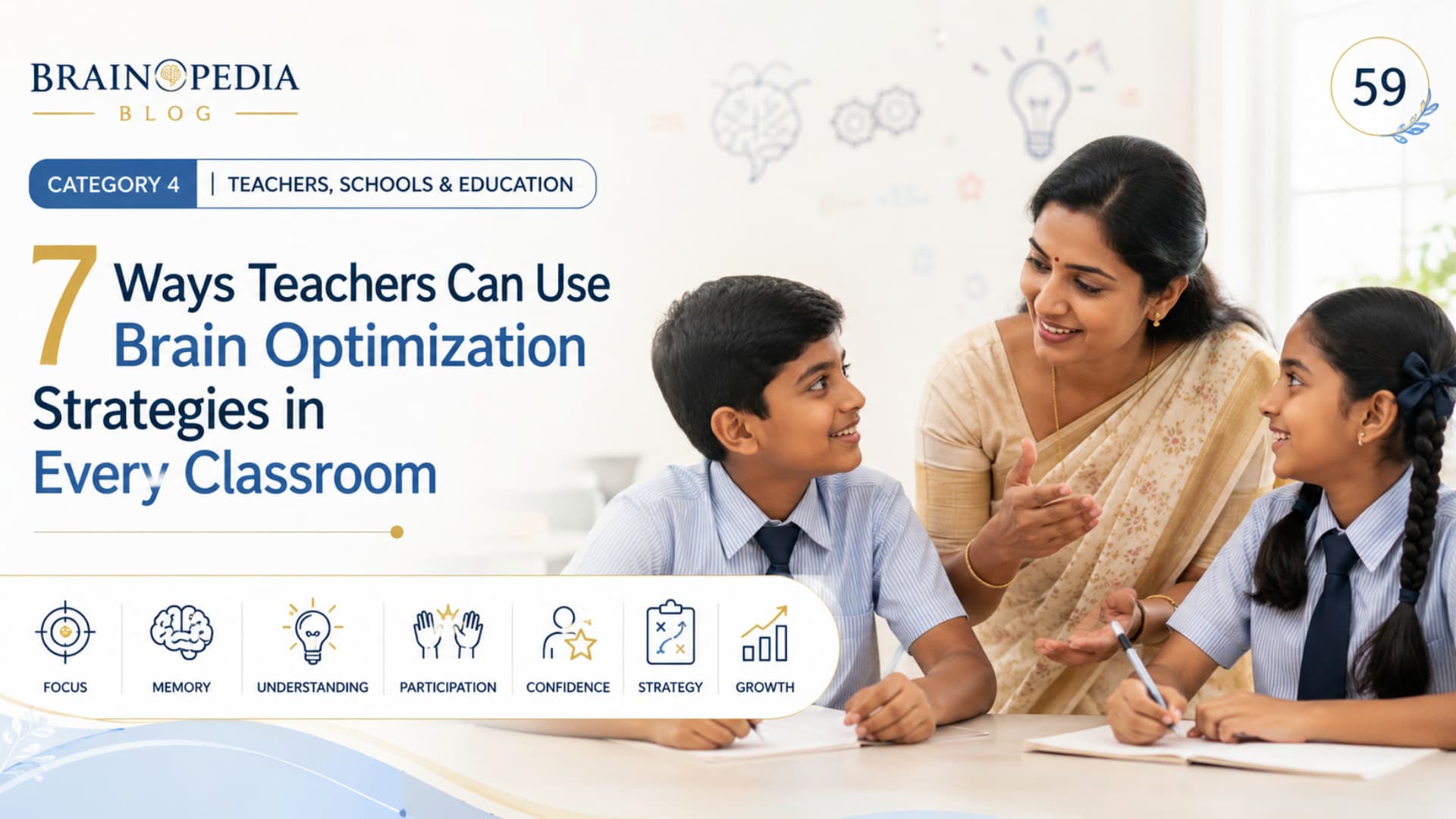
Teaching is not only about delivering information.
It is about helping students pay attention, understand, connect, remember and apply what they learn.
A classroom can become more effective when teaching methods are designed around how learners naturally process information.
Here are 7 brain-based teaching strategies that can make learning more effective and engaging.
________________________________________
1. Connect New Learning With Prior Knowledge
Students understand new information more easily when it connects with something they already know.
Before introducing a topic, ask:
• What do students already know?
• What real-life example can introduce the concept?
• What familiar experience can connect with the lesson?
Why It Helps
Prior knowledge gives new information a foundation.
Instead of learning an isolated fact, students begin building connections.
Teaching Rule
Connect before you explain.
________________________________________
2. Break Complex Information Into Smaller Parts
Long explanations and overloaded lessons can make learning difficult.
Break content into smaller sections.
For example:
Concept → Example → Activity → Review
Why It Helps
Smaller learning units are easier to process and understand.
Students can master one idea before moving to the next.
Classroom Tip
Avoid teaching too many new concepts at once.
Less information, better processing.
________________________________________
3. Use More Than One Mode of Learning
Different forms of presentation can make a lesson clearer.
Combine:
• Explanation
• Visuals
• Demonstration
• Discussion
• Activities
• Practice
Why It Helps
Students receive multiple opportunities to process the same concept.
A diagram may clarify what a paragraph cannot.
A practical example may explain what a definition does not.
Teaching Principle
Explain it. Show it. Let students use it.
________________________________________
4. Encourage Active Recall
Do not always give students the answer immediately.
Ask them to retrieve information.
Try:
• Quick questions
• Exit tickets
• Mini quizzes
• “Explain what you remember”
• Think-pair-share
Why It Helps
Retrieving information strengthens learning better than repeatedly rereading the same material.
Classroom Loop
Learn → Recall → Check → Improve
________________________________________
5. Create Meaning Through Examples and Stories
Abstract information can become easier to understand when connected with stories, situations or real-life examples.
For example:
Instead of only explaining a scientific principle, show how it appears in daily life.
Instead of listing historical facts, explain the sequence as a meaningful story.
Why It Helps
Meaningful information is easier to organise and remember.
Teacher Question
Ask:
“How can I make this idea relatable?”
________________________________________
6. Use Short Reviews Across the Lesson
Do not wait until the end of the chapter to revise.
Pause periodically.
Ask:
• What have we learned so far?
• What was the most important idea?
• What connects with the previous topic?
• What still needs clarification?
Why It Helps
Regular review gives students opportunities to strengthen understanding before new information is added.
Teaching Strategy
Teach → Pause → Review → Continue
________________________________________
7. Build a Positive Learning Environment
Students learn better when they feel safe enough to ask questions, make mistakes and participate.
Create a classroom where:
• Questions are welcomed
• Mistakes become learning opportunities
• Effort is recognised
• Students are encouraged to participate
• Feedback is constructive
Why It Matters
Fear of being wrong can reduce participation.
A supportive environment encourages curiosity and active learning.
Classroom Mindset
Confidence supports participation. Participation supports learning.
________________________________________
The BRAINS Formula
B — Build Connections
Link new information with prior knowledge.
R — Reduce Complexity
Break learning into manageable steps.
A — Activate Recall
Make students retrieve what they learn.
I — Include Multiple Methods
Use visual, verbal and practical learning.
N — Notice Understanding
Review and check comprehension regularly.
S — Support a Positive Environment
Make learning safe, active and engaging.
________________________________________
Key Takeaway
Effective teaching is not about covering the maximum amount of content.
It is about helping students understand and retain what is taught.
Use:
Connections • Smaller Steps • Multiple Methods • Active Recall • Meaningful Examples • Review • Positive Classroom Culture
When teaching works with the learning process, understanding becomes easier to build.
Brain Gurukul Perspective
At Brain Gurukul, we believe effective education should develop more than short-term academic recall.
Teaching should support attention, comprehension, memory, thinking, application and learner confidence.
When classrooms become more active and meaningful, students can participate more deeply in their own learning journey.
Teach for understanding. Engage the learner. Build lasting learning.
Read. Learn. Apply. Grow.
________________________________________
Blog Number: 59
Blog Name: 7 Brain-Based Teaching Strategies That Can Make Learning More Effective
Word Count: ~770 words
Brain-Based Learning • Teaching Strategies • Classroom Learning • Student Engagement • Education