
Parenting & Child Development
7 Simple Parenting Habits That Can Build Stronger Confidence in Children
Child Confidence • Positive Parenting • Self-Esteem • Parenting Habits • Child Development
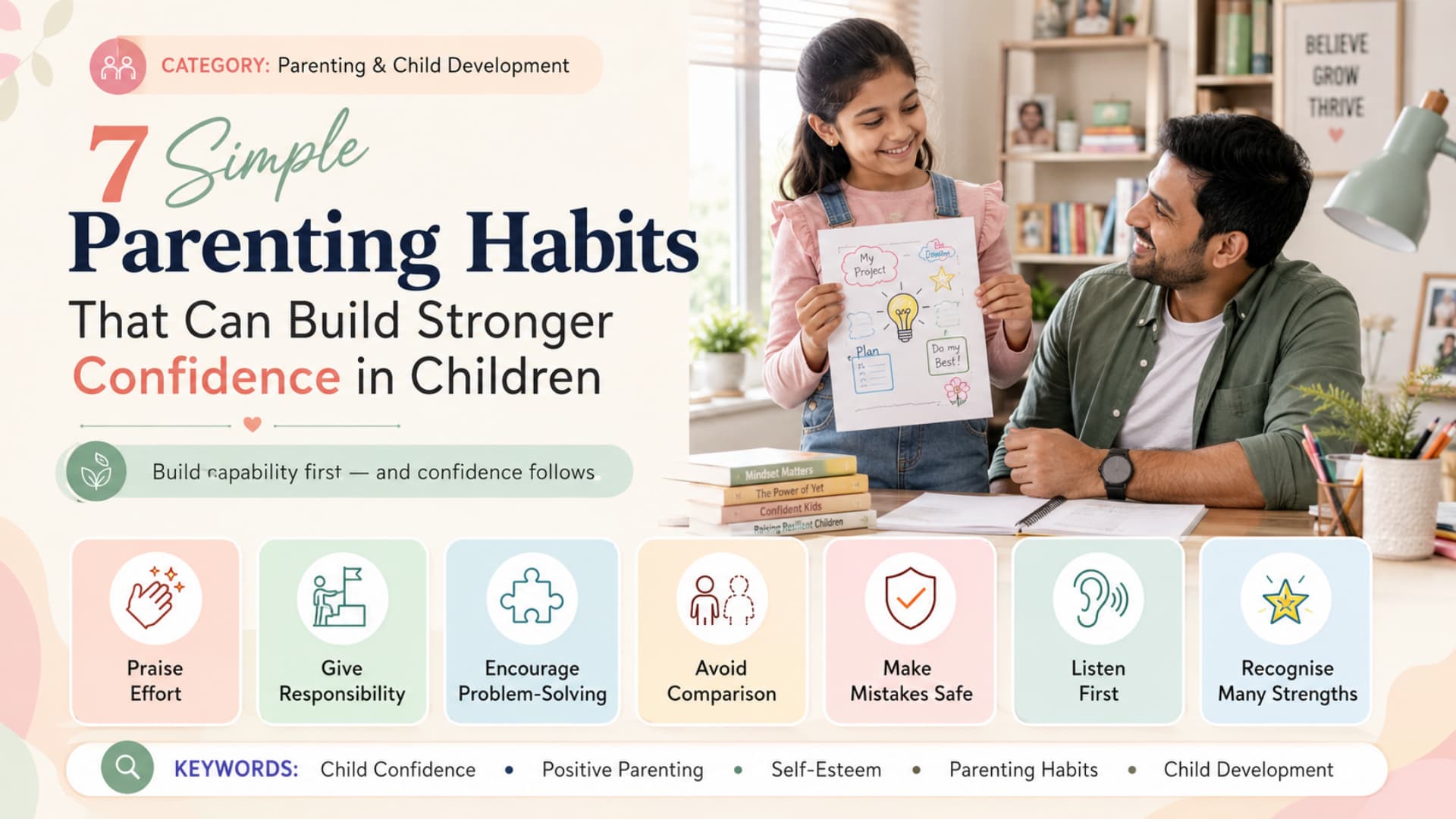
Confidence in children is not built through constant praise.
It grows when children feel capable, trusted, supported and encouraged to handle challenges.
A confident child does not need to believe:
“I can do everything perfectly.”
A healthier belief is:
“I can try, learn, improve and handle mistakes.”
Parents play an important role in shaping this mindset through everyday conversations, routines and responses.
Here are 7 simple parenting habits that can help build stronger confidence in children.
________________________________________
1. Praise Effort, Not Only Results
Children often hear praise when they win, score well or complete something perfectly.
But confidence becomes stronger when effort and strategy are also noticed.
Instead of only saying:
“Great marks!”
try:
“I noticed how consistently you prepared.”
Why It Matters
This teaches children that progress is connected with:
• Practice
• Persistence
• Strategy
• Improvement
They begin valuing the learning process instead of depending only on external results.
________________________________________
2. Give Age-Appropriate Responsibility
Children build confidence when they realise:
“I can handle this myself.”
Simple responsibilities may include:
• Organising their school bag
• Keeping books properly
• Completing a small household task
• Planning study time
• Preparing materials before class
Why It Matters
Responsibility creates opportunities to practise independence.
Parents should guide—but avoid doing everything for the child.
Confidence grows through capability.
________________________________________
3. Allow Children to Solve Small Problems
When a child faces difficulty, parents naturally want to help immediately.
But solving every problem for them can unintentionally reduce opportunities for independent thinking.
Try This First
Ask:
• What do you think you could do?
• What options do you have?
• Which solution would you try first?
Give support when needed, but let the child participate in finding the solution.
Parent Tip
Don't remove every obstacle. Teach the child how to approach it.
________________________________________
4. Avoid Unnecessary Comparison
Statements such as:
“Look how well your cousin studies.”
or
“Why can't you be more like your classmate?”
may motivate some children temporarily—but often create pressure and self-doubt.
Better Comparison
Compare the child with their own previous performance.
Ask:
• Are you improving?
• What can you do better this time?
• What have you learned since last month?
Why It Matters
Children develop healthier confidence when progress feels personal rather than competitive.
Measure growth, not worth.
________________________________________
5. Let Mistakes Feel Safe
Children who are afraid of mistakes often avoid difficult tasks.
A confident learner understands that mistakes are part of growth.
Instead of reacting strongly, try:
“What did this mistake teach you?”
Then help the child:
Understand → Correct → Retry
Why It Matters
When mistakes become learning opportunities, children become more willing to:
• Experiment
• Ask questions
• Attempt difficult work
• Try again
Confidence does not come from never failing. It comes from learning how to recover.
________________________________________
6. Listen Before You Correct
Children need to feel heard.
If parents immediately interrupt, lecture or correct, children may gradually stop sharing their thoughts.
Try This
When your child speaks:
• Listen fully
• Ask questions
• Understand their perspective
• Then guide them calmly
Why It Matters
Being heard communicates:
“Your thoughts matter.”
That supports emotional confidence and communication skills.
Listening does not mean agreeing with everything.
It means understanding before responding.
________________________________________
7. Encourage Progress Outside Academics
Confidence should not depend only on marks.
Children can develop confidence through:
• Sports
• Music
• Art
• Communication
• Helping others
• Creativity
• Leadership
• Practical skills
Why It Matters
A child who struggles academically may still possess many strengths.
Recognising those strengths helps create a more balanced self-image.
Parent Rule
See the whole child—not only the report card.
________________________________________
The CONFIDENCE Formula
C — Celebrate Effort
Notice progress and persistence.
O — Offer Responsibility
Let children do things independently.
N — Nurture Problem-Solving
Guide rather than rescue.
F — Forget Comparisons
Focus on personal growth.
I — Include Mistakes
Treat errors as learning opportunities.
D — Develop Listening
Understand before correcting.
E — Encourage Multiple Strengths
Recognise abilities beyond academics.
________________________________________
Key Takeaway
Confidence is not something parents can simply give through words.
It develops through repeated experiences of:
Trying • Practising • Solving • Improving • Being Heard • Taking Responsibility
The aim is not to raise a child who believes:
“I will never fail.”
The aim is to raise a child who believes:
“Even if I struggle, I can learn and try again.”
Brain Gurukul Perspective
At Brain Gurukul, we believe confidence grows when children understand their strengths, develop important abilities and experience meaningful progress.
Build capability first—and confidence follows naturally.
Read. Learn. Apply. Grow.
________________________________________
Blog Number: 23
Blog Name: 7 Simple Parenting Habits That Can Build Stronger Confidence in Children
Word Count: ~780 words
Child Confidence • Positive Parenting • Self-Esteem • Parenting Habits • Child Development