
Student Success & Learning Skills
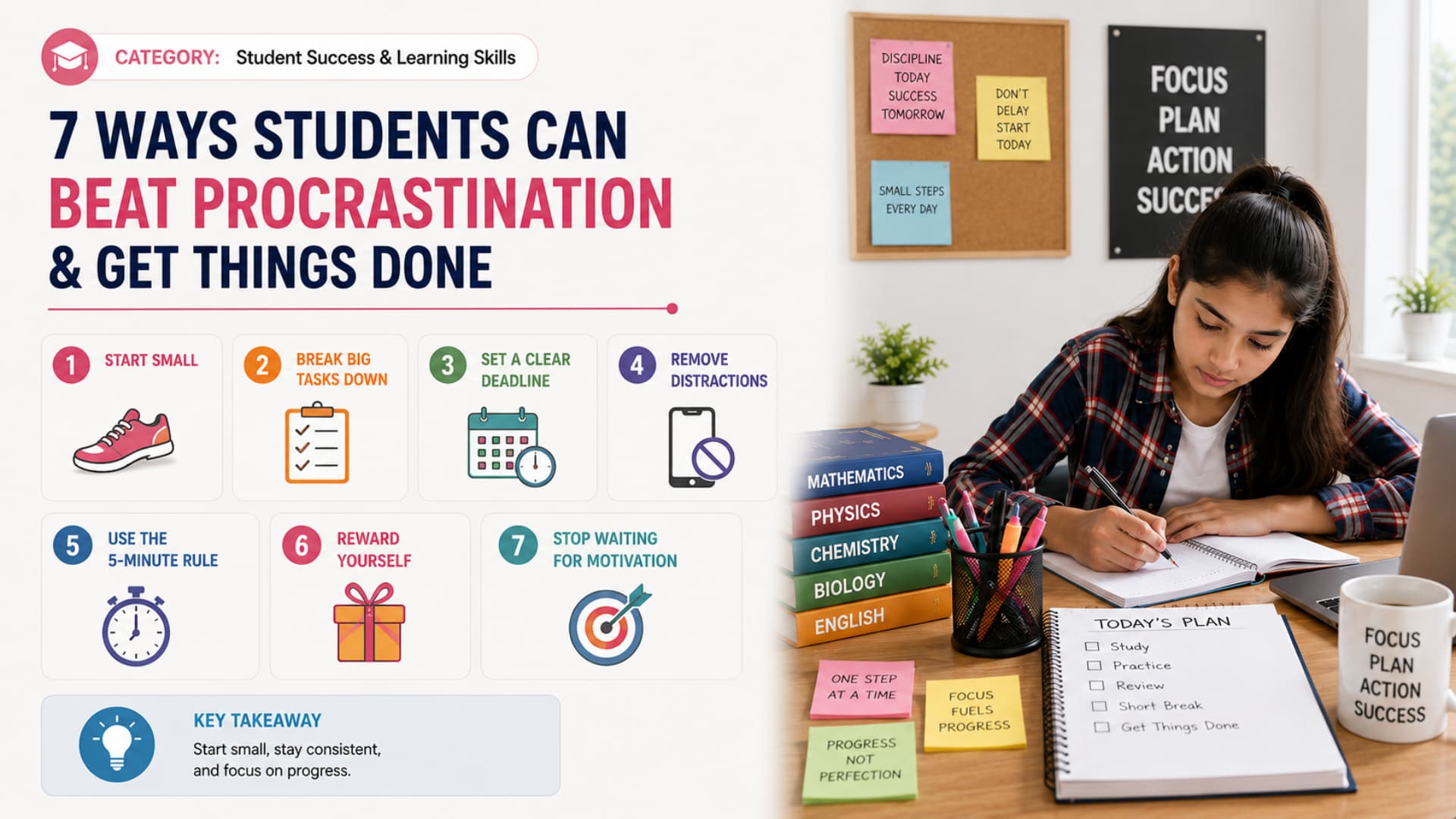
7 Ways Students Can Beat Procrastination and Start Getting Things Done
Procrastination • Student Productivity • Study Habits • Motivation • Time Management
You know the work is important.
You know the deadline is coming.
You even know exactly what needs to be done.
Yet somehow, you keep delaying it.
That is procrastination.
Students often procrastinate not because they are lazy, but because the task feels boring, difficult, unclear, overwhelming or uncomfortable.
The solution is not to wait for perfect motivation.
It is to make starting easier.
Here are 7 practical ways students can beat procrastination and get into action.
________________________________________
1. Make the First Step Extremely Small
A big task can feel intimidating.
Instead of:
“I need to finish the whole chapter.”
start with:
“I will study for 10 minutes.”
Or:
“I will solve the first three questions.”
Why It Helps
Starting creates momentum.
Once you begin, continuing often becomes easier.
Student Rule
Do not focus on finishing everything. Focus on starting something.
________________________________________
2. Break Large Tasks Into Mini-Tasks
“Complete the project” is too broad.
Break it into:
1. Choose topic
2. Collect information
3. Create outline
4. Write introduction
5. Complete first section
6. Review
Why It Matters
Smaller tasks feel more manageable.
They also make progress visible.
Better Question
Instead of:
“How will I finish this?”
ask:
“What is the next small step?”
________________________________________
3. Use a Clear Deadline
Tasks without deadlines are easy to delay.
Compare:
“I will revise chemistry sometime today.”
with:
“I will revise chemistry from 6:00 to 6:30 PM.”
The second version is clearer.
Why It Helps
A specific time turns intention into an appointment.
Study Tip
Put important tasks on your timetable instead of keeping them only in your head.
Scheduled work is more likely to become completed work.
________________________________________
4. Remove Easy Distractions
Procrastination becomes much easier when your phone, games or social media are always available.
Before starting:
• Put the phone away
• Turn off notifications
• Close entertainment tabs
• Keep only required materials
• Create a quiet study zone
Why It Matters
Every distraction gives you an easy escape from difficult work.
Make the desired action easier than the distraction.
Remember
Environment can either support discipline or fight against it.
________________________________________
5. Use the “Just Five Minutes” Rule
When you strongly feel like avoiding a task, tell yourself:
“I only need to do this for five minutes.”
Start the timer and begin.
After five minutes, you can decide whether to continue.
Most of the difficulty often lies in starting, not in the task itself.
Why It Helps
Five minutes feels less threatening than:
“I must study for two hours.”
This lowers resistance and helps create motion.
________________________________________
6. Reward Completion, Not Delay
Small rewards can make progress feel satisfying.
For example:
Finish one study block → Take a short break
Complete assignment → Watch one episode
Finish weekly goals → Enjoy a planned activity
Why It Matters
The reward should follow the effort.
Avoid:
Entertainment first → Study later
because “later” often keeps moving.
Productivity Rule
Work first. Reward second.
This trains your routine around completion rather than avoidance.
________________________________________
7. Stop Waiting for Motivation
Students often say:
“I will start when I feel motivated.”
But motivation is unreliable.
Some days you will feel excited.
Other days you will not.
Better Approach
Create a repeatable system:
**Same Study Time
• Same Study Place
• Clear First Task
• Short Focus Block**
Why It Matters
Consistency reduces dependence on mood.
Action can actually create motivation.
Once you begin making progress, you often feel more willing to continue.
Remember
You do not always need motivation to start. Sometimes starting creates motivation.
________________________________________
The START Formula
S — Shrink the Task
Make the first step small.
T — Time-Block It
Give the task a clear schedule.
A — Avoid Distractions
Protect the environment.
R — Reward Progress
Celebrate completion.
T — Take Action Anyway
Do not wait for the perfect mood.
________________________________________
Key Takeaway
Procrastination usually grows when work feels too large, unclear or easy to avoid.
You can reduce it through:
Smaller Tasks • Clear Deadlines • Fewer Distractions • Quick Starts • Consistent Routines
Instead of saying:
“I’ll do it later.”
ask:
“What can I begin in the next five minutes?”
That question turns delay into action.
Brain Gurukul Perspective
At Brain Gurukul, we believe student success depends not only on ability, but also on learning habits, self-discipline and the ability to take action consistently.
Start small. Act now. Build momentum. Finish stronger.
Read. Learn. Apply. Grow.
________________________________________
Blog Number: 45
Blog Name: 7 Ways Students Can Beat Procrastination and Start Getting Things Done
Word Count: ~775 words
Procrastination • Student Productivity • Study Habits • Motivation • Time Management