Teachers, Schools & Education
7 Ways Technology Is Changing the Modern Classroom
Education Technology • Digital Learning • Smart Classroom • Teaching Innovation • Future Education
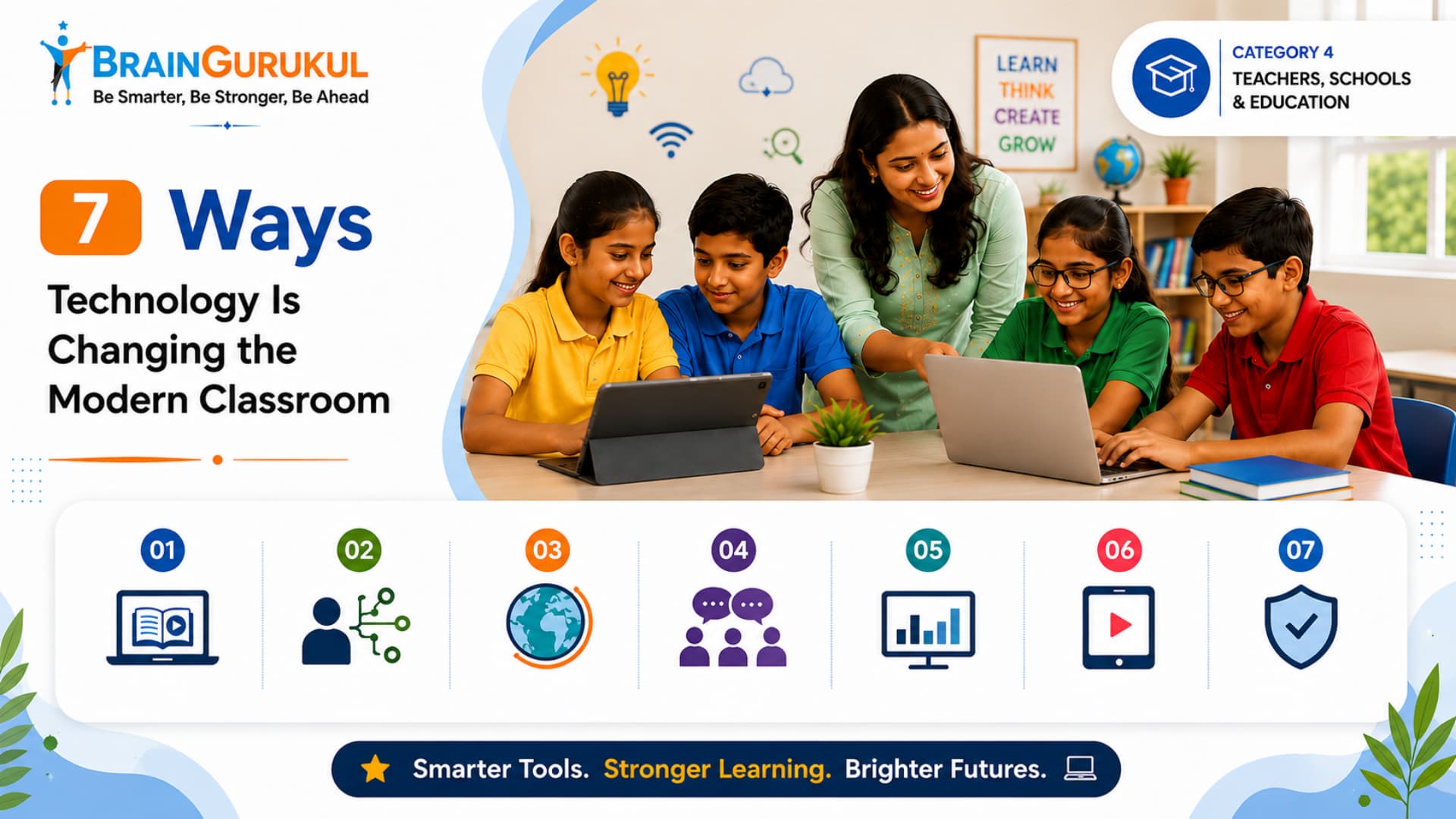
Technology is changing the classroom from a place where information is simply delivered into a space where learning can become more interactive, flexible and connected.
The goal, however, should not be to use technology just because it is available.
The real value comes when technology helps students understand better, participate more actively and access learning in smarter ways.
Here are 7 important ways technology is changing the modern classroom.
________________________________________
1. Learning Is Becoming More Interactive
Digital tools can turn passive lessons into interactive experiences.
Teachers can use:
• Smart boards
• Interactive presentations
• Polls
• Quizzes
• Simulations
• Educational apps
Why It Helps
Students can respond, explore and participate during the lesson instead of only listening.
Teaching Rule
Use technology to activate learning, not just display information.
________________________________________
2. Students Can Access More Learning Resources
Classroom learning is no longer limited to one textbook.
Students can access:
• Videos
• Digital libraries
• Articles
• Visual explanations
• Online practice
• Interactive models
Why It Matters
Different resources can explain the same concept in different ways.
That can help students who need another example or format to understand a difficult topic.
Student Advantage
More access can create more opportunities to understand.
________________________________________
3. Teachers Can Personalise Learning More Easily
Digital platforms can help teachers identify:
• Which students need extra practice
• Which topics are causing difficulty
• Who is progressing quickly
• Where additional support may be useful
Why It Helps
Teachers can adjust tasks and resources more effectively.
Technology does not replace the teacher.
It can help the teacher make more informed decisions.
Teaching Principle
Technology provides information. Teachers provide judgement.
________________________________________
4. Collaboration Can Go Beyond the Classroom
Students can work together using shared digital tools.
They may:
• Create presentations
• Share documents
• Work on projects
• Exchange ideas
• Give peer feedback
Why It Matters
Collaboration can continue even when students are not sitting at the same desk.
It also develops communication and teamwork skills.
Classroom Strategy
Create together. Share ideas. Improve together.
________________________________________
5. Learning Can Continue Beyond School Hours
Technology can extend learning beyond the classroom.
Students may access:
• Recorded lessons
• Assignments
• Revision material
• Practice activities
• Teacher resources
Why It Helps
Students can review difficult concepts at their own pace.
It also gives learners another opportunity to revisit what was taught in class.
Learning Mindset
The classroom can end. Learning does not have to.
________________________________________
6. Assessment Can Become Faster and More Informative
Digital quizzes and learning platforms can provide quick feedback.
Teachers can see:
• Correct and incorrect responses
• Common mistakes
• Completion rates
• Areas needing revision
Why It Matters
Fast feedback allows teachers to adjust instruction sooner.
Students also learn where they need improvement.
Assessment Loop
Attempt → Feedback → Improve → Retry
________________________________________
7. Digital Responsibility Is Becoming Part of Education
As technology becomes more common, students also need to learn how to use it responsibly.
This includes:
• Checking information
• Protecting privacy
• Managing screen time
• Communicating respectfully
• Avoiding unsafe online behaviour
• Using AI and digital tools thoughtfully
Why It Matters
Being comfortable with technology is not enough.
Students also need digital judgement.
Future-Ready Rule
Use technology intelligently, safely and responsibly.
________________________________________
The SMART Formula
S — Support Learning
Technology should help understanding.
M — Make Learning Interactive
Encourage participation.
A — Adapt to Learner Needs
Use data and resources thoughtfully.
R — Reach Beyond the Classroom
Extend access and collaboration.
T — Teach Responsible Use
Build digital awareness.
________________________________________
Key Takeaway
Technology can make classrooms more flexible, interactive and responsive.
But the strongest classrooms do not simply add more devices.
They use technology with a clear learning purpose.
Focus on:
Interaction • Access • Personalisation • Collaboration • Flexibility • Feedback • Digital Responsibility
The future classroom is not about more technology. It is about better learning through technology.
Brain Gurukul Perspective
At Brain Gurukul, we believe technology should support learning rather than distract from it.
Digital tools become valuable when they strengthen attention, understanding, practice, creativity and communication.
Teachers remain central to the learning process because meaningful education still depends on human guidance, judgement and connection.
Use technology wisely. Keep learning human. Make education smarter.
Read. Learn. Apply. Grow.
________________________________________
Blog Number: 68
Blog Name: 7 Ways Technology Is Changing the Modern Classroom
Word Count: ~760 words
Education Technology • Digital Learning • Smart Classroom • Teaching Innovation • Future Education