Student Success & Learning Skills
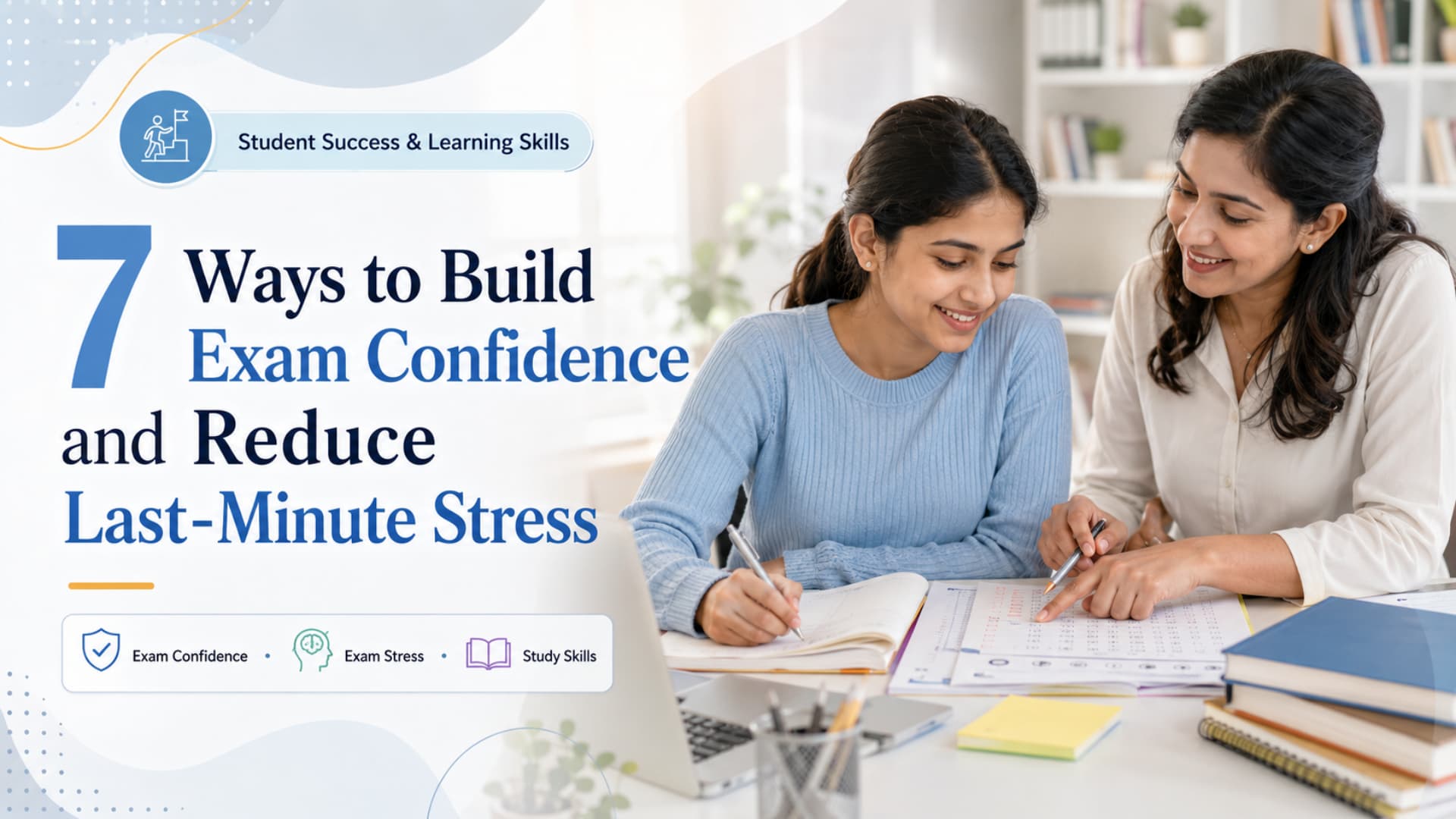
7 Ways to Build Exam Confidence and Reduce Last-Minute Stress
Exam Confidence • Exam Stress • Study Skills • Student Success • Academic Performance
Exam confidence does not appear automatically on the morning of the test.
It is built gradually through preparation, practice, self-belief and a calm routine.
Many students become anxious not because they know nothing, but because they feel unprepared, rushed or uncertain about what to expect.
The good news is that confidence can be developed.
Here are 7 practical ways to build exam confidence and reduce last-minute stress.
________________________________________
1. Start Preparation Early
One of the biggest causes of exam stress is trying to learn too much in too little time.
Instead of waiting for the final days, begin revision early.
Break the syllabus into smaller sections.
For example:
Day 1 → Chapter 1
Day 2 → Chapter 2
Day 3 → Practice Questions
Why It Helps
Early preparation gives your brain more time to understand, revise and remember.
Student Rule
Start small. Start early. Stay consistent.
________________________________________
2. Make a Simple Revision Plan
A long syllabus can feel overwhelming when everything seems equally urgent.
Create a realistic plan that includes:
• Important topics
• Weak areas
• Practice time
• Revision sessions
• Breaks
Why It Helps
A plan turns uncertainty into direction.
Instead of thinking:
“There is too much to do.”
you begin thinking:
“I know what I need to do next.”
That feeling itself can reduce stress.
________________________________________
3. Practise Under Exam-Like Conditions
Confidence grows when the exam environment becomes familiar.
Try solving:
• Sample papers
• Previous questions
• Timed exercises
• Mock tests
Sit at a desk and work without unnecessary interruptions.
Why It Matters
Practice teaches you how to manage:
Time • Questions • Pressure • Accuracy
The more familiar the process feels, the less intimidating the real exam may become.
Confidence Loop
Practise → Check → Improve → Practise Again
________________________________________
4. Focus on Progress, Not Perfection
Some students become anxious because they expect themselves to know everything perfectly.
That is unrealistic.
Instead, ask:
• What do I understand better today?
• Which mistakes have I corrected?
• What still needs attention?
Why It Helps
Progress-based thinking makes improvement visible.
Even small improvement builds confidence.
Student Mindset
Do not chase perfection. Build preparation.
________________________________________
5. Review Mistakes Before the Exam
Your mistakes can become one of your best revision tools.
Keep a short list of:
• Wrong answers
• Forgotten formulas
• Confusing concepts
• Frequently repeated errors
Then review this list before the exam.
Why It Matters
You avoid wasting time revising everything equally.
You focus on the areas that need the most attention.
Learning Rule
Mistake → Understand → Correct → Remember
________________________________________
6. Protect Your Routine Before Exam Day
The night before an exam is not the time to completely change your routine.
Avoid:
• Studying extremely late
• Skipping meals
• Excessive screen time
• Trying to learn an entire new chapter
• Constantly discussing preparation with anxious friends
Instead, prepare your materials, review key points and maintain a reasonable sleep routine.
Why It Helps
A calmer body supports a calmer mind.
Exam-Eve Rule
Prepare. Review. Organise. Rest.
________________________________________
7. Use a Calm Exam-Day Strategy
When you receive the paper, do not rush immediately.
Take a few moments to:
• Read the instructions
• Scan the questions
• Notice marks and sections
• Plan your time
• Begin with confidence
If one question feels difficult, avoid panic.
Move ahead and return to it later when appropriate.
Why It Helps
A structured approach keeps one difficult question from affecting your entire performance.
Exam Mindset
One question at a time. One section at a time.
________________________________________
The CALM Formula
C — Create a Plan
Know what and when to revise.
A — Act Early
Avoid last-minute preparation.
L — Learn From Practice
Use mock tests and mistakes.
M — Manage Your Mind
Stay organised, rested and focused.
________________________________________
Key Takeaway
Exam confidence is not simply positive thinking.
It grows from:
Preparation • Practice • Organisation • Revision • Rest • Self-Belief
The better prepared you feel, the less power last-minute panic has over you.
Confidence grows when preparation becomes stronger than fear.
Brain Gurukul Perspective
At Brain Gurukul, we believe exam performance is influenced not only by knowledge, but also by preparation habits, attention, confidence and the ability to manage pressure.
Students who prepare steadily and learn from their mistakes are often better equipped to enter exams with a calmer and more organised mindset.
Prepare smart. Stay calm. Perform confidently.
Read. Learn. Apply. Grow.
________________________________________
Blog Number: 56
Blog Name: 7 Ways to Build Exam Confidence and Reduce Last-Minute Stress
Word Count: ~755 words
Exam Confidence • Exam Stress • Study Skills • Student Success • Academic Performance