
Parenting & Child Development
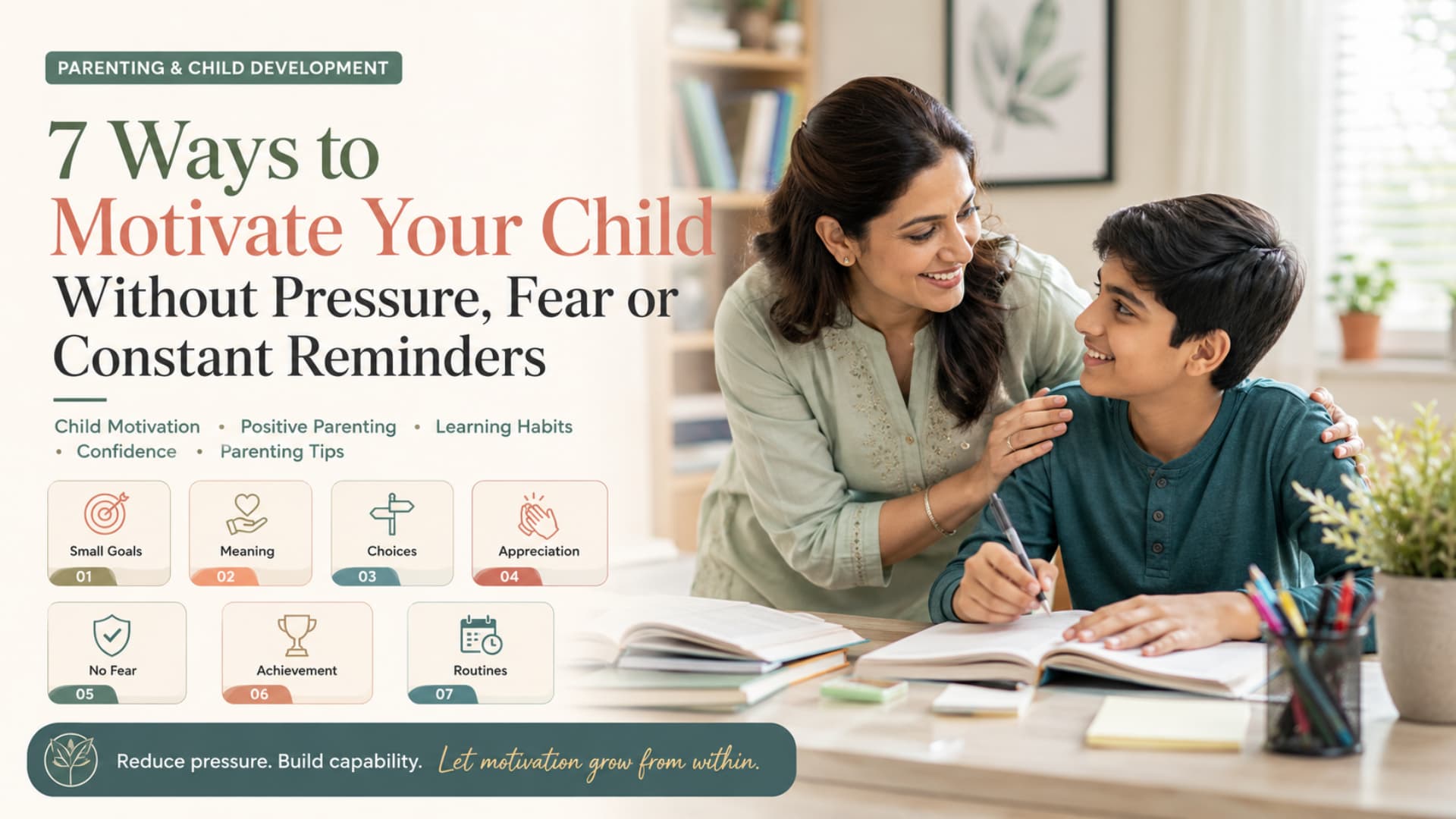
7 Ways to Motivate Your Child Without Pressure, Fear or Constant Reminders
Child Motivation • Positive Parenting • Learning Habits • Confidence • Parenting Tips
Many parents ask:
“Why does my child need to be reminded again and again?”
The answer is not always laziness.
Children may avoid tasks because they feel bored, overwhelmed, afraid of failure, unclear about what to do, or disconnected from the purpose of the activity.
Motivation grows better when children feel capable, involved and supported.
Here are 7 practical ways to motivate your child without relying on pressure, fear or constant reminders.
________________________________________
1. Make the Goal Clear and Small
A large instruction can feel difficult to start.
Instead of:
“Finish all your homework.”
try:
“Complete these five questions first.”
Why It Matters
Small goals reduce overwhelm and make progress visible.
Once one task is complete, move to the next.
Parent Tip
Use:
Small Goal → Complete → Appreciate → Continue
Starting becomes easier when the first step feels manageable.
________________________________________
2. Connect Learning With Meaning
Children are more likely to engage when they understand why something matters.
Instead of:
“You have to learn this because it is in the exam.”
try connecting the topic with:
• Real-life examples
• Interests
• Future goals
• Everyday problems
• Stories
Why It Matters
Meaning can turn a task from obligation into curiosity.
Ask:
“Where could you use this in real life?”
A relevant task often feels more motivating than a disconnected one.
________________________________________
3. Give Choices Within Boundaries
Children often resist when they feel they have no control.
Small choices can create ownership.
For example:
“Would you like to start with maths or science?”
or
“Would you prefer to study before or after your snack?”
Why It Matters
The parent still sets the boundary:
Homework must be completed.
But the child gets some control over how to approach it.
Parenting Rule
Give freedom inside structure.
________________________________________
4. Appreciate Effort and Progress
Motivation weakens when children hear only what is wrong.
Notice improvement too.
Say:
“You stayed focused longer today.”
or
“You solved that difficult question without giving up.”
Why It Matters
Specific appreciation helps children recognise which behaviours are working.
Praise:
• Effort
• Strategy
• Persistence
• Improvement
• Responsibility
Not only final marks.
Remember
What gets noticed often gets repeated.
________________________________________
5. Stop Using Fear as the Main Motivator
Statements such as:
“You will fail if you don't study.”
or
“Everyone will move ahead of you.”
may create temporary action.
But fear can also create anxiety and resistance.
Better Approach
Discuss consequences calmly.
Instead of:
“If you don't study, your future will be ruined.”
try:
“Regular study will make exams easier and reduce last-minute stress.”
Why It Matters
Long-term motivation works better when children understand benefits, responsibilities and consequences without feeling constantly threatened.
________________________________________
6. Let Children Experience Achievement
Motivation often increases after success.
A child who repeatedly fails may begin thinking:
“Why should I even try?”
Create tasks that are challenging but achievable.
Use the Success Ladder
Easy Start → Moderate Challenge → Achievement → Next Level
Why It Matters
Visible progress creates confidence.
Confidence then makes the child more willing to attempt harder work.
Success builds motivation when it follows genuine effort.
________________________________________
7. Reduce Reminders by Building Routines
If parents remind children every day:
“Study now.”
“Pack your bag.”
“Finish your homework.”
the parent becomes responsible for remembering everything.
Build External Structure
Use:
• Timetables
• Checklists
• Study schedules
• Reminder boards
• Fixed routines
Then gradually let the child manage them.
Why It Matters
The goal is to move from:
Parent reminds → Routine reminds → Child remembers
That is how independence grows.
________________________________________
The MOTIVATE Formula
M — Make Goals Small
Create easy starting points.
O — Offer Choices
Build ownership.
T — Tie Learning to Meaning
Show why it matters.
I — Identify Progress
Notice effort and improvement.
V — Value Achievement
Create opportunities for success.
A — Avoid Fear
Guide without threatening.
T — Turn Reminders Into Routines
Build independence.
E — Encourage Consistently
Support growth over time.
________________________________________
Key Takeaway
Motivation cannot always be forced from outside.
Parents can create conditions that help motivation grow.
Use:
Clear Goals • Meaning • Choice • Encouragement • Achievement • Routine
Instead of asking:
“How do I make my child study?”
try asking:
“How can I help my child take greater ownership of learning?”
That is the path toward stronger, more independent motivation.
Brain Gurukul Perspective
At Brain Gurukul, we believe sustainable learning grows when children develop confidence, responsibility and a sense of progress.
Reduce pressure. Build capability. Let motivation grow from within.
Read. Learn. Apply. Grow.
________________________________________
Blog Number: 34
Blog Name: 7 Ways to Motivate Your Child Without Pressure, Fear or Constant Reminders
Word Count: ~775 words
Child Motivation • Positive Parenting • Learning Habits • Confidence • Parenting Tips