Teachers, Schools & Education
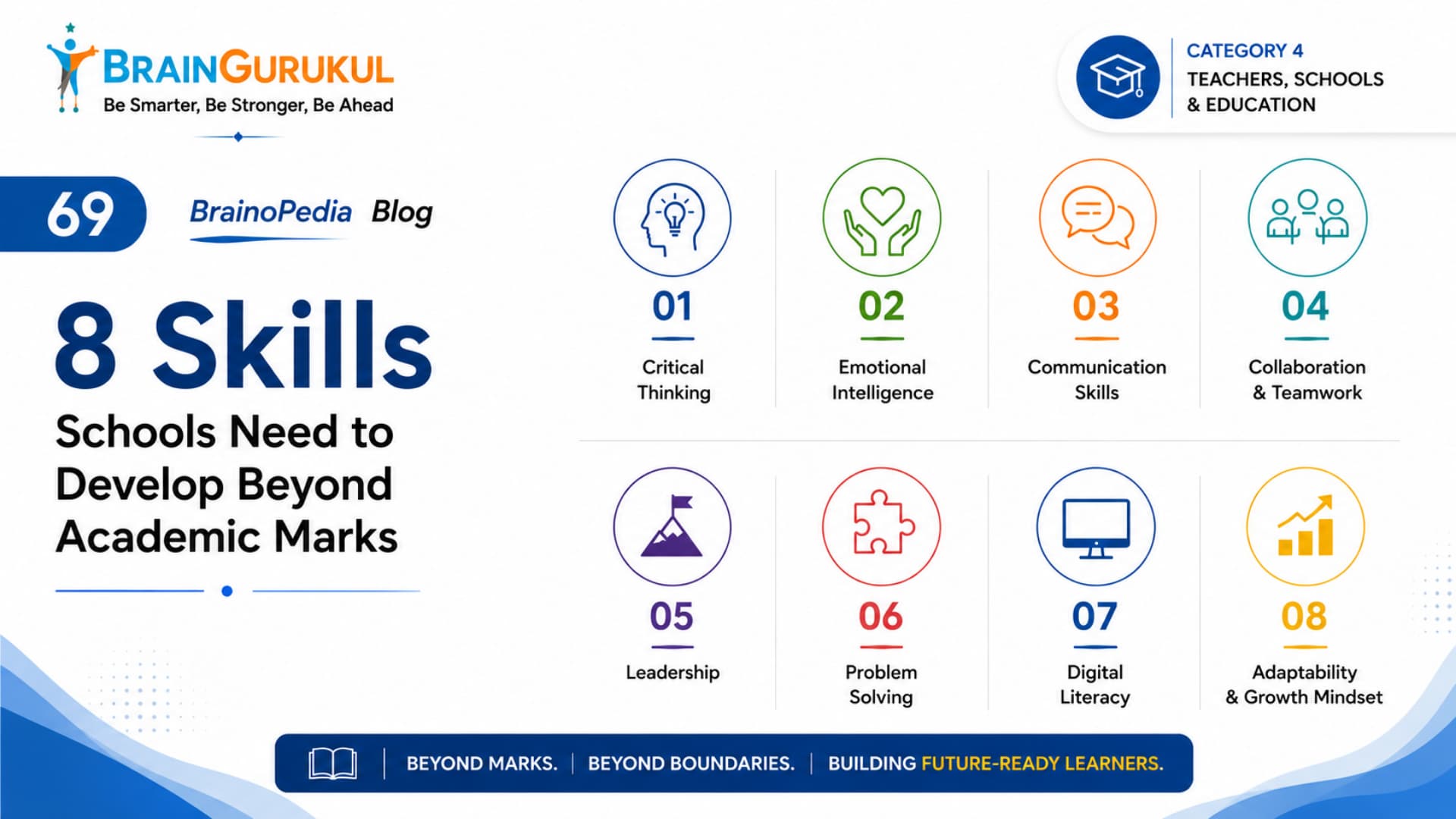
8 Skills Schools Need to Develop Beyond Academic Marks
Holistic Education • Future Skills • Student Development • Life Skills • Education
Academic marks matter.
But marks alone cannot fully prepare students for life, careers or the rapidly changing world around them.
A student may score well in exams and still struggle with communication, decision-making, adaptability or emotional control.
That is why schools need to develop abilities that go beyond academic performance.
Here are 8 essential skills schools should help students build beyond marks.
________________________________________
1. Communication Skills
Students should learn how to express ideas clearly.
This includes:
• Speaking confidently
• Writing effectively
• Listening carefully
• Asking questions
• Presenting ideas
Why It Matters
Knowledge becomes more useful when students can communicate it well.
School Principle
Teach students not only to know, but also to express.
________________________________________
2. Critical Thinking
Students should learn to question information instead of accepting everything immediately.
Encourage them to ask:
• Is this reliable?
• What evidence supports it?
• Are there other possibilities?
• What conclusion makes sense?
Why It Helps
Critical thinking supports better learning, decisions and problem-solving.
Thinking Rule
Question. Analyse. Decide.
________________________________________
3. Problem-Solving
Students need opportunities to solve real and unfamiliar problems.
Teach them to:
• Identify the challenge
• Break it into parts
• Explore options
• Test solutions
• Improve their approach
Why It Matters
Future situations will not always come with ready-made answers.
Student Mindset
Do not fear problems. Learn how to solve them.
________________________________________
4. Creativity and Innovation
Education should give students opportunities to imagine, experiment and create.
They can:
• Generate new ideas
• Design solutions
• Explore alternatives
• Build projects
• Ask “What if?”
Why It Helps
Creativity helps students move beyond routine thinking.
Classroom Question
“Can this be done differently?”
________________________________________
5. Emotional Intelligence
Students need to understand their own emotions and respond effectively to others.
This includes:
• Self-awareness
• Self-control
• Empathy
• Relationship skills
• Responsible decision-making
Why It Matters
Emotional intelligence supports confidence, teamwork and resilience.
Life Rule
Manage emotions before emotions manage decisions.
________________________________________
6. Collaboration
Modern learning and work often require teamwork.
Students should practise:
• Sharing responsibility
• Listening to others
• Respecting different views
• Resolving disagreements
• Working toward common goals
Why It Helps
Collaboration teaches students how to contribute within a team.
School Principle
Learn independently. Work effectively together.
________________________________________
7. Adaptability and Learning Agility
The future will require students to keep learning new things.
They should become comfortable with:
• Change
• New technology
• New information
• Different methods
• Continuous learning
Why It Matters
The ability to adapt can become more valuable than relying only on existing knowledge.
Future Skill
Learn. Adjust. Improve. Repeat.
________________________________________
8. Self-Management
Students also need to manage themselves.
This includes:
• Time
• Goals
• Habits
• Attention
• Responsibilities
• Priorities
Why It Helps
Self-management builds independence.
Students become less dependent on constant reminders and supervision.
Student Rule
Manage yourself before managing bigger responsibilities.
________________________________________
The BEYOND Formula
B — Build Communication
Learn to express ideas clearly.
E — Evaluate Information
Develop critical thinking.
Y — Your Emotions Matter
Build emotional intelligence.
O — Own Your Responsibilities
Develop self-management.
N — Navigate Change
Strengthen adaptability.
D — Develop Solutions
Build creativity and problem-solving.
________________________________________
Key Takeaway
Academic achievement is important, but education should prepare students for more than exams.
Schools should develop:
Communication • Critical Thinking • Problem-Solving • Creativity • Emotional Intelligence • Collaboration • Adaptability • Self-Management
Marks may open doors, but broader skills help students succeed after they enter.
Brain Gurukul Perspective
At Brain Gurukul, we believe education should develop the learner as a whole.
Academic performance is one part of success, but long-term growth also depends on communication, emotional intelligence, critical thinking, creativity, learning agility and self-management.
When schools build these abilities alongside academics, students become better prepared for both present challenges and future opportunities.
Educate beyond marks. Develop stronger abilities. Prepare students for life.
Read. Learn. Apply. Grow.
________________________________________
Blog Number: 69
Blog Name: 8 Skills Schools Need to Develop Beyond Academic Marks
Word Count: ~755 words
Holistic Education • Future Skills • Student Development • Life Skills • Education